Guides
Budget Home Makeover: Transform a Room for Less
July 11, 2026 · 8 min read
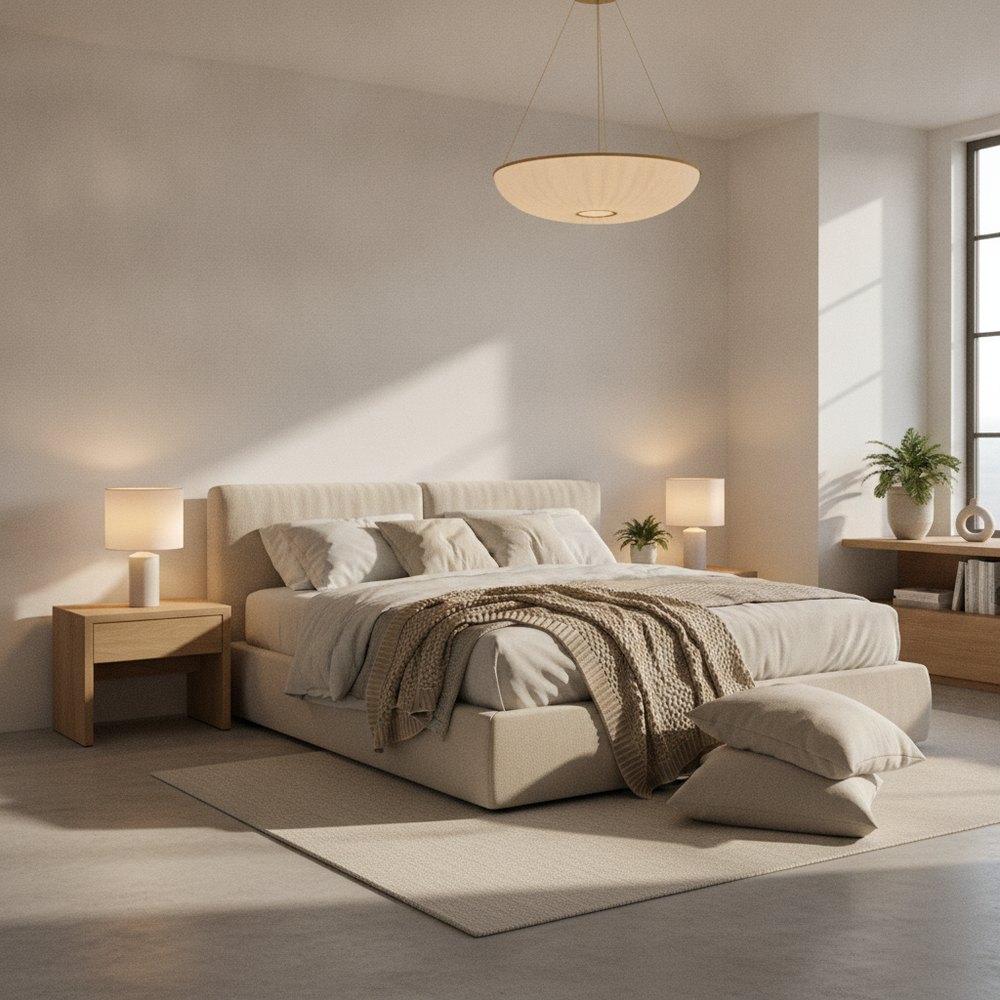
A budget home makeover transforms a room using low-cost, high-impact changes rather than structural work. The biggest returns come, in order, from decluttering, fresh paint, layered lighting, new textiles and a smarter furniture layout, changes that cost little, need no builder, and can be done in a weekend.
Can you transform a room on a small budget?
Yes, and often more than people expect, because the elements that make a room feel considered are rarely the expensive ones. Layout, light, colour and cohesion do most of the heavy lifting, and all four can be changed for very little.
The trick is to spend your money and effort in the right order. Below are the highest-impact changes ranked roughly from free to modest, so you can stop whenever the room feels right or the budget runs out.
One mindset shift helps more than any single purchase: stop thinking about buying a finished room and start editing the one you have. Most spaces are not lacking things, they are lacking order, light and a clear point of focus, none of which has to be bought.
Start free: declutter and deep clean
Before spending anything, empty the room of what does not belong and give it a proper clean. Clutter reads as visual noise; removing it is the single most transformative free change you can make, and it lets you see the space honestly before you invest.
- Clear every surface, then return only what you use or love.
- Take one bag of genuine clutter out of the room entirely.
- Clean the windows, natural light is free and dirty glass steals it.
- Assess what you already have with fresh eyes before buying anything new.
Paint: the highest-impact change per rupee
Nothing else transforms a room as cheaply as paint. For the price of a few tins you can reset the entire mood, brighten a dark room, warm a cold one, or add depth with a single feature wall.
Choose colour by the feeling you want and the light the room gets. North-facing rooms suit warm whites and soft tones that counter cool light; bright rooms can carry deeper, moodier colours. Test large swatches on more than one wall and view them at different times of day before committing. Our guide to wall colour psychology goes deeper.
If you only change one thing, change the paint, but respect the preparation. Clean the walls, fill the holes, and use two coats. The difference between a cheap-looking and an expensive-looking paint job is almost always preparation and patience, not the price of the tin.
- Light colours make a small room feel larger and airier.
- A darker feature wall adds depth and a focal point cheaply.
- Painting trim and walls the same colour makes a room feel calm and larger.
- Do not forget the fifth wall, a pale ceiling lifts the whole room.
Lighting: layer it instead of relying on one bulb
A single overhead light flattens a room and makes it feel institutional. The fastest way to make a space feel expensive is to layer lighting, and it is far cheaper than people assume.
Good lighting works in three layers: ambient (general), task (for reading, cooking, working) and accent (mood and highlights). A couple of plug-in lamps and a warmer bulb temperature can change a room more than a furniture purchase. See the best lighting for every room for room-by-room detail.
- Add two or three light sources at different heights instead of one ceiling fixture.
- Choose warm-white bulbs (around 2700K) for living and sleeping spaces.
- Put lamps in the dark corners every room has.
- Use a dimmer or smart bulb so one room can shift from bright to cosy.
Textiles: the cheap route to warmth and colour
Soft furnishings add colour, texture and comfort for a fraction of the cost of furniture, and they are the easiest thing to change again later. Layering different textures is what makes a budget room feel rich rather than sparse.
Texture is the secret ingredient of a cheap room that looks expensive. A space can be almost entirely neutral and still feel considered if it layers a chunky wool throw against smooth linen against a jute rug, because the eye reads variety and depth even where there is little colour or cost.
- Swap or add cushions and a throw to introduce your accent colour.
- Hang curtains high and wide, close to the ceiling and past the window edges, to make walls feel taller.
- Add a rug to define the space and warm hard floors, sized correctly as below.
- Mix textures, linen, wool and cotton, so the room feels layered, not flat.
Rework the layout before you buy anything
Rearranging what you already own is completely free and often the biggest single improvement. Most rooms are laid out by habit rather than design, and simply moving furniture can unlock space and flow.
Before you move anything permanently, live with the new arrangement for a day or two. Flow is something you feel rather than plan, and the layout that looks right on paper is not always the one that works when you actually move through the room each morning.
- Pull large furniture slightly off the walls, a small gap makes a room feel more spacious, not less.
- Anchor the layout on a clear focal point, such as a window or fireplace.
- Keep walkways clear so people move through the room naturally.
- Float the sofa to define a conversation area rather than lining the walls.
How do you make a small room feel bigger on a budget?
Small rooms respond dramatically to a few free or cheap moves, and the goal is always to trick the eye into reading more space and light than there really is.
- Keep walls and trim in the same light tone to blur the edges of the room.
- Hang a large mirror opposite or beside a window to bounce daylight around.
- Lift the eye with tall curtains and a few clean vertical lines.
- Choose furniture with legs and some visible floor beneath it, so the room feels less blocked.
- Cut visual clutter, fewer and larger objects read as calmer and roomier than many small ones.
Where should you splurge and where should you save?
A budget makeover is not about buying the cheapest of everything; it is about spending the little you have where it shows and saving everywhere else.
- Splurge on: the one thing you touch or see daily, a good lamp, quality paint, a rug that fits.
- Save on: trend-led accessories, seasonal decor and anything you will tire of.
- Free wins: decluttering, rearranging, cleaning glass and styling what you own.
- Skip for now: structural changes and big furniture unless they solve a real problem.
How do you preview a budget makeover before spending?
The cheapest mistake is the one you never make. Before buying paint or textiles, it helps to see the direction on your actual room so you commit with confidence rather than hoping.
Upload a photo to Decorly, try a style, and get a photorealistic redesign that keeps your existing layout in about seconds. It is a fast way to test a wall colour or a mood on your own space before you spend on the real thing. For the wider process, see the complete room transformation guide and the furniture placement guide, or browse more room ideas.
Frequently asked questions
What is the cheapest way to transform a room?
Declutter and rearrange what you already own first, both are free, then paint, which delivers the biggest visible change per rupee of anything you can buy.
What should I do first in a budget makeover?
Declutter and deep clean. It costs nothing, instantly makes the room feel larger and calmer, and lets you judge the space honestly before spending on paint or textiles.
Does paint colour really make that much difference?
Yes. Paint resets a room's entire mood for the price of a few tins. Choose by the light the room gets and test large swatches at different times of day before committing.
How can I make a room look more expensive cheaply?
Layer lighting instead of using one overhead bulb, hang curtains high and wide, add texture with textiles, and give large furniture a little breathing room from the walls.
Can I redesign a room without renovating?
Absolutely. Paint, lighting, textiles and a smarter layout reach most of the effect with no builder. Preview the look first with an AI tool like Decorly to spend with confidence.