Rooms
Small Bedroom Makeover: Ideas to Maximise Space
July 11, 2026 · 8 min read
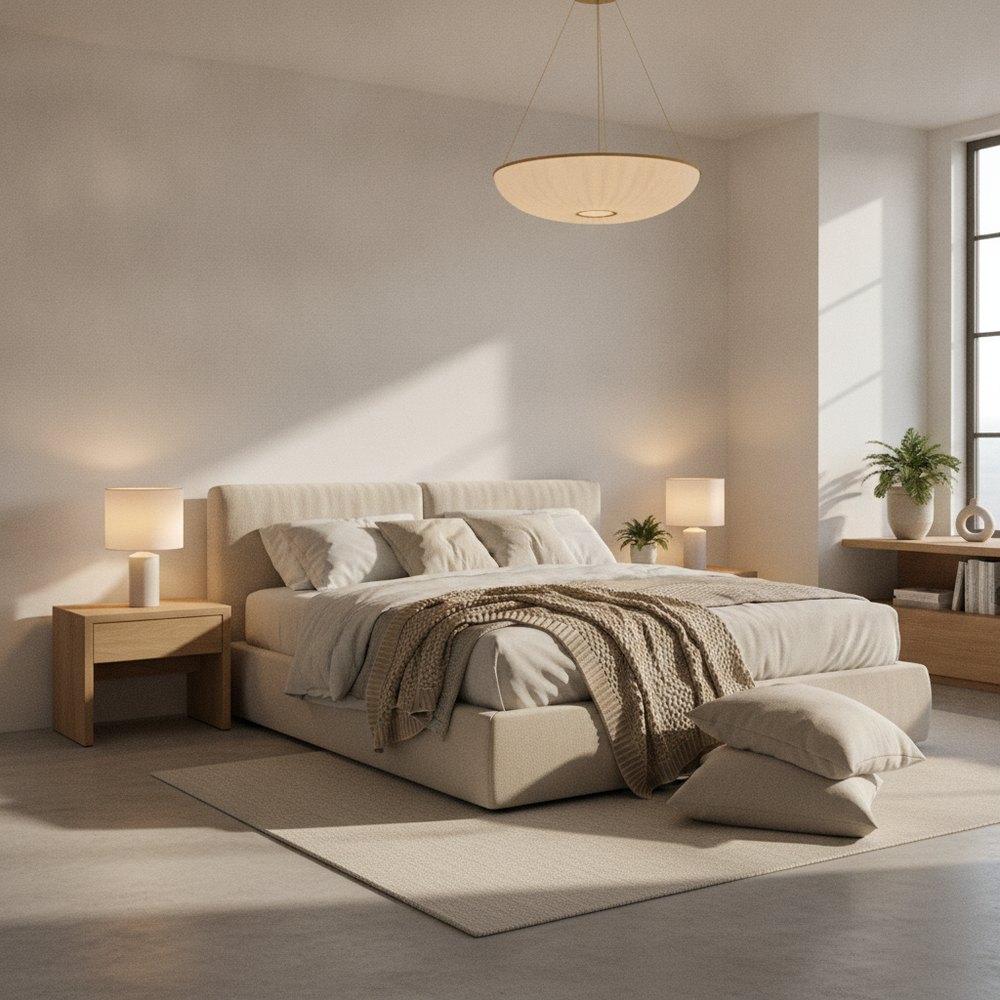
To make a small bedroom feel bigger, keep the palette light and continuous, float the bed on the longest uninterrupted wall, and push storage upward and under the bed to free the floor. Layer soft lighting instead of one harsh ceiling fixture, and choose fewer, better-scaled pieces.
How do you make a small bedroom feel bigger?
The feeling of space comes less from square footage than from visual calm. A small bedroom looks bigger when the palette is light and continuous, the floor is as clear as possible, and clutter is hidden behind closed storage. Every surface you keep empty and every sightline you keep open makes the room breathe.
Start by editing ruthlessly — a small room cannot carry excess furniture or décor. Then commit to a few high-impact moves: a lighter wall colour, taller storage, better lighting, and a bed placed to leave the clearest possible walkway. For a wider small-space toolkit, our small apartment interior design guide shares many principles that apply here.
Where should the bed go in a small bedroom?
The bed is the largest object in the room, so its position sets everything else. In most small bedrooms the bed sits centred on the longest uninterrupted wall, which keeps walkways even on both sides and lets the room read symmetrically. If the room is very narrow, pushing the long side of the bed against one wall can free a usable path — a common choice in children's rooms and box rooms.
Aim to keep at least 60cm of clearance on the sides you need to walk or dress, and try not to block the window or the wardrobe swing. Avoid placing the head of the bed under a window where you can — it complicates curtains and heating — but in a tight room a good-looking, workable outcome beats a rigid rule.
What is the best storage for a small bedroom?
Storage makes or breaks a small bedroom. The goal is maximum capacity with minimum visual noise, which means going vertical, using the dead space under the bed, and choosing furniture that does two jobs:
- Choose a divan or ottoman bed with drawers or a lift-up base for bulky bedding and off-season clothes.
- Build wardrobes to the ceiling — the top shelf stores rarely used items and removes a dust-collecting gap.
- Add floating shelves and wall-mounted bedside sconces instead of bulky nightstands and lamps.
- Use the back of the door and slim over-door racks for shoes, bags or accessories.
- Pick a headboard with built-in shelving or a narrow ledge to replace side tables.
- Keep one drawer or basket empty as a landing spot so clutter never spreads onto surfaces.
What colours make a small bedroom look bigger?
Light, cool-leaning and continuous colours recede, which visually pushes the walls outward. Soft whites, warm off-whites, pale greys, muted sage and gentle blush all work. Painting the walls, skirting and even the ceiling in closely related tones removes the visual breaks that chop up a small room and make it feel boxy.
That does not mean a small bedroom has to be bland. Add depth with texture — linen bedding, a woven rug, a timber headboard — and one considered accent, perhaps a single deeper wall behind the bed. If you want a cocooning bedroom, a small room can actually carry a dark colour beautifully, provided the lighting is warm and layered. Wall colour psychology covers how specific tones affect rest and mood.
How should you light a small bedroom?
Small bedrooms suffer most from a single harsh ceiling light. Replace or supplement it with layers: a soft ambient source, warm reading lights either side of the bed, and a low accent glow for winding down. Wall-mounted or pendant reading lights are a small-room secret — they deliver bedside light without eating the surface of a tiny nightstand.
Keep bulbs warm (around 2700K) and on dimmers so the room can shift from bright to restful. A mirror placed to catch daylight, or hung opposite a window, effectively doubles the natural light and makes the room feel larger. For a room-by-room approach, see the best lighting for every room.
How do you choose furniture that fits?
In a small bedroom, scale discipline matters more than anywhere else. Measure the room and tape out the bed and any wardrobe footprint on the floor before you buy — it is startling how much a frame's surround adds. Prefer pieces with visible legs and slim profiles; furniture you can see under feels lighter and keeps the floor plane open.
Choose fewer, better pieces over many small ones. A single well-proportioned wardrobe beats a scatter of small units, and a slim bed frame leaves more room than a chunky upholstered one. When something has to be big, let it be the one hero and keep everything else quiet.
Which styles suit small bedrooms?
The best small-bedroom styles share a love of light, restraint and natural texture.
- Scandinavian: bright walls, pale wood and cosy textiles that keep a small room airy but warm.
- Japandi: calm, low-slung and tactile — ideal for a restful, uncluttered sleep space.
- Minimalist: pared-back and clutter-free, so a small footprint never feels crowded.
- Modern: clean lines and a neutral base that make a compact room feel considered.
How can you preview the makeover first?
To see any of these on your own room, upload a photo to Decorly, choose a style, and get a photorealistic redesign in seconds that keeps your real layout and window positions. Browsing bedroom ideas or a specific look like Scandinavian bedroom ideas is a fast way to lock in a direction before you paint or shop.
If pared-back calm appeals, our minimalist home design guide goes deeper on doing more with less — exactly the mindset a small bedroom rewards.
What small bedroom mistakes should you avoid?
- Choosing an oversized bed that leaves no walkway — sometimes a smaller frame gives a better room.
- Filling every wall with furniture instead of leaving breathing space.
- Relying on one central ceiling light.
- Using lots of small, mismatched storage instead of one tall, unified wardrobe.
- Hanging curtains at window height rather than high and wide, which shrinks the wall.
- Leaving surfaces cluttered — visible clutter is what actually makes a small room feel small.
Frequently asked questions
How do I make a small bedroom look bigger on a budget?
Paint walls a light, continuous tone, hang curtains high and wide, add a large mirror opposite the window, clear the surfaces, and swap bedside tables for wall lights. These cost little but change the room dramatically.
Where should the bed go in a small bedroom?
Usually centred on the longest uninterrupted wall for even walkways, or long-side against a wall in very narrow rooms to free a path. Keep about 60cm of clearance on the sides you use.
What is the best storage for a small bedroom?
An ottoman or divan bed with under-bed storage, wardrobes built to the ceiling, floating shelves and wall-mounted bedside lights. The aim is high capacity with as little visual clutter as possible.
Can a small bedroom be a dark colour?
Yes. A small bedroom can carry a deep, moody colour beautifully if the lighting is warm and layered. Dark walls can make a compact room feel intentional and cocooning rather than cramped.
Can I preview a small bedroom makeover before decorating?
Yes. Upload a photo to Decorly, pick a style, and see a photorealistic redesign of your bedroom in seconds — an easy way to test palettes and layouts risk-free.