Styles
Scandinavian Interior Design: The Complete Guide
July 11, 2026 · 9 min read
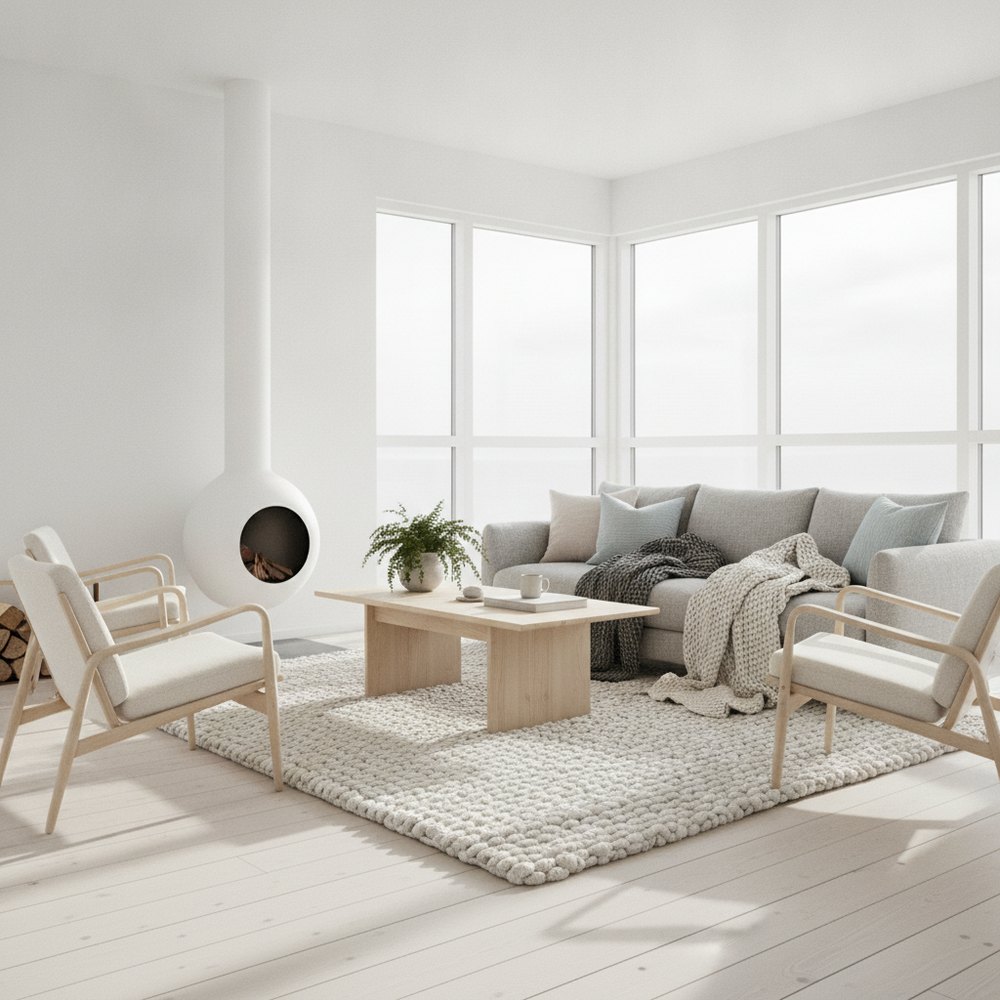
Scandinavian interior design is a Nordic style built on light, pale wood and functional simplicity. Shaped by the long, dark winters of Denmark, Sweden and Norway, it fills rooms with white walls, natural materials, clean lines and cosy hygge textures — creating spaces that feel bright, calm, uncluttered and genuinely liveable.
What defines Scandinavian interior design?
Scandinavian design is defined by three ideas working together: light, natural materials and function. Rooms are kept bright and airy so the most of every hour of daylight is used; surfaces are honest and tactile rather than glossy or ornate; and every piece has a job to do. Nothing is purely decorative for its own sake, yet the result is warm rather than clinical.
The style sits close to minimalism but is softer and cosier. Where a strict minimalist room can feel austere, a Scandinavian room layers wool, sheepskin and candlelight over its clean bones so it still feels like a place you want to curl up in. That balance of restraint and comfort is why the look has stayed popular for decades and why it pairs so easily with Japandi.
Where did Scandinavian design come from?
The style grew out of the Nordic countries in the early-to-mid twentieth century, when designers set out to make beautiful, affordable objects for ordinary homes rather than luxury for the few. Long, dark winters and small city apartments pushed a practical response: maximise natural light, keep spaces flexible, and use the honest local materials that were close to hand — pine, birch, oak, wool and leather.
That democratic idea — good design for everyone — became the movement's signature. It also explains why Scandinavian pieces still feel timeless: they were drawn to be useful and durable first, and handsome second. When you build a room in this style you are borrowing a philosophy as much as a palette. To see how it fits alongside other looks, browse the full range of interior design styles.
The Scandinavian colour palette
The palette is light, muted and low-contrast. White and off-white do the heavy lifting on walls to bounce daylight around the room, and colour is introduced slowly through wood tones, soft greys and gentle, dusty accents.
- Whites and off-whites — chalk, bone and warm white on walls and ceilings.
- Pale wood tones — oak, ash, birch and beech for floors and furniture.
- Soft greys — from misty pale grey to deeper charcoal for grounding.
- Muted naturals — sand, oatmeal, greige and stone.
- Dusty accents — sage, dusty blue, blush and terracotta, used sparingly.
- Black in small doses — a lamp, a frame or thin metal legs for contrast.
Materials and textures
Because the colours are quiet, texture becomes the main event. A well-designed Scandinavian room is full of things to touch — that is what stops all the white from feeling flat. Layer several natural textures in the same tonal family so the eye reads richness without any loud colour.
- Pale timber — wide-plank oak or ash floors, plywood and solid-wood furniture.
- Wool and knits — chunky throws, cushions and rugs for warmth.
- Sheepskin and leather — draped over a chair or bench for softness and patina.
- Linen and cotton — relaxed, breathable upholstery and bedding.
- Rattan, cane and jute — woven baskets and light natural-fibre rugs.
- Ceramics and stoneware — handmade, imperfect and matte rather than shiny.
Furniture and layout
Scandinavian furniture is low, light and clean-lined, often raised on slim tapered legs so the floor stays visible and the room feels open. Silhouettes are simple and slightly rounded rather than boxy or heavy. Choose fewer, better pieces and give each one room to breathe instead of filling every wall.
Keep the layout functional and unforced: a sofa you can actually relax on, a real reading chair, a table that gathers people. Multifunction is prized — a bench that stores blankets, a nesting side table, a daybed for guests. If you want room-specific inspiration, see our living room design ideas and bedroom ideas, or preview the look on your own space with Scandinavian living room designs.
Lighting: the heart of a Nordic home
In a region where winter days are short, lighting is not an afterthought — it is the soul of the style. The goal is layered, warm, low-level light rather than one bright ceiling fixture. Nordic homes are famous for their love of candles, and for good reason: pooled, flickering warmth is the fastest route to that cosy feeling.
Build light in layers: keep windows as bare as possible for daylight, then add table and floor lamps, a sculptural pendant over the dining table, and plenty of candles. Choose warm-white bulbs (around 2700K) and put lamps on the floor and on side tables, not just overhead. For a deeper dive, read our guide to the best lighting for every room.
What is hygge, and how do you build it in?
Hygge (roughly, huu-gah) is the Danish idea of cosy contentment — the feeling of being warm, safe and unhurried. It is less a decorating rule than a mood you design toward, and it is what separates a genuinely Scandinavian room from a cold, showroom-perfect one.
You build hygge through soft, layered textiles, warm pools of light, natural materials you want to touch, and a few personal, meaningful objects. A throw within arm's reach, a stack of books, a candle burning, a plant on the sill — small comforts that make a space feel lived-in rather than staged.
How to get the Scandinavian look, room by room
Follow these steps to bring the style into any room. You can preview each change on your actual space in seconds with Decorly before you buy or paint anything.
- 1Lighten the shell first — paint walls and ceilings a warm white and, if you can, expose or fit pale wood flooring.
- 2Choose one hero wood tone and repeat it across floor, furniture and frames so the room feels cohesive.
- 3Add a low, clean-lined sofa or bed in a soft grey or oatmeal fabric with slim legs.
- 4Layer texture, not colour — pile on wool throws, linen cushions, a sheepskin and a jute rug.
- 5Introduce warm, layered lighting — table and floor lamps at 2700K plus candles, never one harsh overhead.
- 6Edit ruthlessly — clear surfaces, hide clutter in woven baskets and leave negative space.
- 7Finish with life — a few plants, handmade ceramics and one or two personal objects.
Common Scandinavian design mistakes
- Going all-white and cold — without texture and warm light, the room reads clinical rather than cosy.
- Using harsh, blue-white bulbs — cool light kills hygge instantly; stick to warm 2700K.
- Over-matching from a single flat-pack range — mix wood tones and eras so it looks collected, not bought in one trip.
- Heavy, dark curtains — they block the daylight the whole style depends on; choose sheer linen or leave windows bare.
- Clutter creep — even a beautiful Scandinavian room fails if surfaces fill up; storage and editing are non-negotiable.
- Forgetting the floor — dark or busy flooring fights the light palette; pale timber is the foundation.
Frequently asked questions
What is the difference between Scandinavian and minimalist design?
Both value simplicity and clean lines, but Scandinavian design is warmer and cosier — it layers wool, wood, candlelight and hygge over its minimal bones, while pure minimalism keeps decoration and texture to an absolute minimum.
What colours work best for a Scandinavian room?
Start with warm white walls, add pale wood and soft greys, then introduce muted, dusty accents like sage, blush or dusty blue. Keep contrast low and let texture — not bold colour — create interest.
Is Scandinavian design good for small spaces?
Yes. Its light palette, low furniture on legs and love of clever storage make rooms feel bigger and brighter, which is exactly why the style grew up in compact Nordic apartments.
How can I try the Scandinavian look before committing?
Upload a photo of your room to Decorly, pick the Scandinavian style, and get a photorealistic redesign in seconds that keeps your real layout — so you can test the palette and furniture before spending anything.