Styles
Hygge Home Ideas: Cosiness Done Properly, Not Just Candles
July 25, 2026 · 8 min read
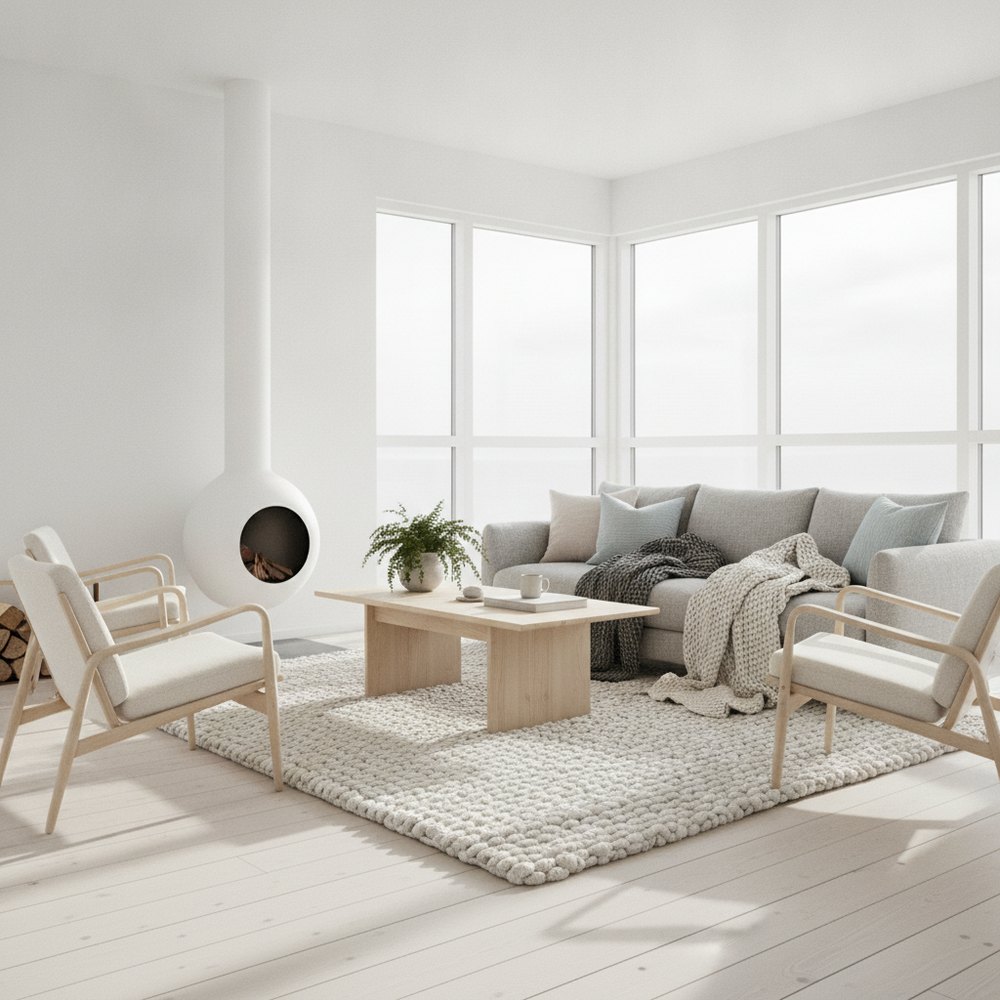
Hygge (roughly "hoo-gah") is the Danish idea of cosy, contented togetherness, a feeling more than a look. A hygge home supports it with soft, low lighting, tactile natural layers, real warmth, and small daily rituals. It is about slowing down and feeling at ease, not buying a set of matching candles.
What hygge actually means, and what it doesn't
Around 2016 hygge arrived in Britain as a marketing category: fluffy socks, a scented candle, a blanket, buy the book. Which rather missed the point, because hygge is not a product and it is certainly not a shopping list.
The Danes use the word for a feeling, the particular contentment of being warm, unhurried and at ease, usually with people you like, often when it is filthy weather outside. A home cannot manufacture that feeling, but it can make it far more likely. That is the whole job of a hygge home: to be the kind of place where you naturally slow down, settle in and stay a while. Everything below serves that, and nothing below is really about decoration.
Why lighting is the whole game
If you change one thing, change the light. The Danes are near-obsessive about it, and they are right. A bright overhead pendant blazing away at 5,000 kelvin will kill any sense of hygge stone dead, no matter how many throws you own.
The principle is many small, low, warm sources instead of one big cold one. Think a scatter of table and floor lamps around the edges of the room, all warm-white, most of them switched on in the evening rather than the ceiling light. The Danes call the sweet spot the pools of low light you get from lamps and candles at head height and below. Add real candles, they flicker, which no bulb quite matches, and the room stops feeling lit and starts feeling glowing. Our best lighting for every room guide covers the layering in detail.
The tactile layers that make a room hyggelig
Hygge is a physical, sensory thing, so the surfaces you touch matter as much as the ones you see. The aim is a room that quietly invites you to burrow into it, which comes from natural, soft, slightly imperfect materials rather than anything sleek.
- Wool and sheepskin a chunky-knit throw over the arm of a chair, a sheepskin on a hard seat; warmth you can see.
- Linen and cotton soft, washed, unfussy; on cushions and curtains it keeps the room relaxed rather than smart.
- Natural wood a worn oak table, wooden bowls, exposed timber; warm to the eye and to the hand.
- A generous rug wool or a deep pile underfoot, because cold floors are the enemy of hygge.
- Well-worn favourites the armchair you always choose, the mug you always reach for; comfort beats matching.
Warmth, real and felt
Hygge is a cold-weather idea at heart, the Danish winter is long and dark, so genuine physical warmth sits at the centre of it. Not a stylistic warmth, actual heat.
A wood-burner or an open fire is the classic hygge anchor, drawing everyone towards it the way a screen never quite does. Most of us do not have one, and that is fine: a warm rug, heavy curtains that keep the draught out, a hot drink permanently on the go, and lamps with warm bulbs all add up to the same felt warmth. The test is simple, does the room make you want to take your shoes off and stay? If it does, you are most of the way there.
The small rituals a home should support
This is the part the candle marketing skips entirely, and it is the part that actually matters. Hygge is really about small, repeated pleasures, and a good home makes them easy rather than making them happen.
- The evening wind-down a reading corner with a good lamp, so the ritual has somewhere to live; see reading nook ideas.
- The slow morning coffee somewhere you actually want to sit, near the best of the daylight.
- Eating together, unhurried a table you gather at, candles lit, phones elsewhere; the meal as the event.
- Doing nothing well a comfortable spot with no screen pointed at it, purely for sitting and talking.
- Weathering the weather a window seat or a warm chair that makes a grey, wet day feel like a treat rather than a trial.
How does hygge differ from just "cosy"?
Fair question, because in English we would call most of the above cosy and leave it there. The distinction is subtle but worth having.
Cosy describes a physical state, warm, soft, snug. Hygge includes all of that but adds contentment, presence and, usually, company or calm. You can be cosy and stressed, wrapped in a blanket doomscrolling. You cannot really be hygge and stressed; the whole idea assumes you have put the worry down for the evening. So a hygge home is not only physically comfortable, it is arranged to encourage you to switch off, which is why decluttering and a screen-free corner matter as much as the throws.
How do you bring hygge into a modern home?
You do not need a Danish farmhouse or a wood-burner to live hyggeligt, and you certainly do not need to buy a themed decor set. The approach layers onto almost any home, especially a Scandinavian one, and most of it costs little.
- Fix the lighting first swap cold bulbs for warm-white, add lamps, use the ceiling light less; this alone transforms a room.
- Layer natural textures wool, linen, wood and a good rug, built up slowly rather than bought in one go.
- Declutter for calm hygge cannot settle in a chaotic room; clear surfaces let the softness show.
- Make a corner for a ritual one comfortable, well-lit spot dedicated to reading, coffee or simply sitting.
- Bring in a little life a plant or two, some greenery, keeps the warmth from feeling closed-in.
- Light a real candle the cheapest and most effective hygge upgrade there is.
How can you picture a hygge scheme in your own room?
Cosiness is hard to judge from a mood board, because so much of it is light, texture and atmosphere combining in a specific room. It is easy to buy the throws and still end up with a space that photographs warm but does not feel it.
With Decorly you upload a photo of your own room and see it restyled with softer lighting, layered natural textures and a warmer palette, keeping your real windows and layout. It is a low-cost way to test whether a hygge direction works before you rewire a lamp or buy a rug. For the wider look it sits inside, our Scandinavian interior design and cosy bedroom ideas guides are natural next reads.
Frequently asked questions
What is a hygge home?
A hygge home is one arranged to encourage warmth, calm and contented togetherness, the Danish idea of hygge. In practice that means soft, low, warm lighting, tactile natural layers like wool and linen, real physical warmth, and comfortable spots that support small daily rituals. It is a feeling the home supports, not a decor style you buy.
How do I make my home more hygge?
Start with the lighting: swap cold bulbs for warm-white, add several low lamps and use the ceiling light less. Then layer wool, linen and wood, declutter for calm, dedicate one comfortable corner to a daily ritual like reading or coffee, and light a real candle. Small changes, big shift in feeling.
Is hygge just candles and blankets?
No, that is the marketing version. Candles and blankets help, but hygge is really about slowness, warmth, presence and comfort, feeling at ease and unhurried, usually in good company or calm. A home supports it through lighting, texture and rituals as much as through any single object.
What lighting is best for a hygge home?
Many small, low, warm-white sources rather than one bright overhead light. A scatter of table and floor lamps at head height and below, dimmed in the evening, plus real candles for their flicker. Avoid cold, blue-toned bulbs and blazing ceiling pendants, which flatten any sense of cosiness.
What is the difference between cosy and hygge?
Cosy is a physical state, warm, soft and snug. Hygge includes that but adds contentment, calm and presence, usually with company. You can be cosy and stressed; you cannot really be hygge and stressed, because the idea assumes you have switched off for a while.