Rooms
Cosy Bedroom Ideas for a Calming Retreat
July 12, 2026 · 9 min read
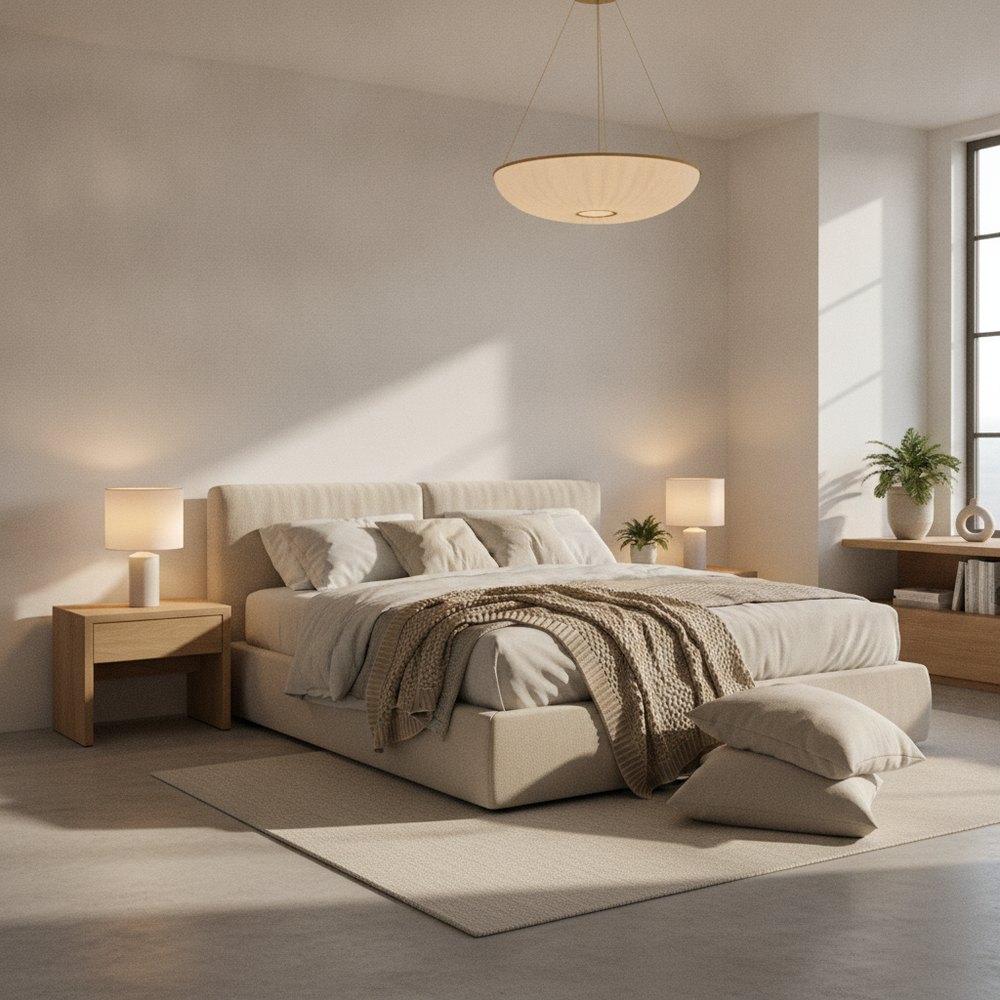
A cosy bedroom is built from layers, warmth and restraint. Start with a warm, muted palette, then layer soft textiles — quality bedding, a rug underfoot, curtains and throws — and light the room in warm, dimmable pools rather than one bright overhead. Add a substantial headboard, tidy bedsides and remove clutter, and any bedroom becomes a calming retreat.
What makes a bedroom feel cosy?
Cosiness is a feeling created by texture, warmth and softness working together — not by a single purchase. A cosy room engages the senses: soft things to touch, warm light to relax the eyes, sound-absorbing surfaces that quieten the space, and a calm palette that lowers the visual noise. When those layers combine, the room feels enveloping rather than empty.
It is also about restraint. A cluttered, over-furnished or harshly lit bedroom never reads as restful, however expensive the pieces. The goal of a bedroom retreat is calm, so the design should subtract distractions as deliberately as it adds comfort. Keep this dual instinct — layer softness, remove noise — and every decision below falls into place.
How do you layer textiles for warmth?
Textiles are the single biggest driver of cosiness, because they add softness, texture and sound absorption all at once. Think in layers from the floor up: a rug to warm the floor, generous curtains to soften windows and hush the room, and a bed built from several tactile layers rather than a single flat duvet.
Vary texture more than colour. A linen duvet, a chunky knit throw, a quilted coverlet and a mix of cushion fabrics create depth even in an all-neutral scheme — this is how designers make a calm palette feel rich rather than flat. Aim for contrast in feel: smooth against nubbly, matte against a subtle sheen.
- A rug underfoot — soft landing for bare feet and instant floor warmth; large enough to sit under the bed.
- Layered bedding — sheet, duvet, a folded coverlet or quilt, plus mixed cushions for depth.
- A throw at the foot — chunky knit or wool adds texture and an easy seasonal swap.
- Full, lined curtains — floor-length and generous, they soften light and absorb sound.
- Mixed cushion fabrics — linen, velvet and knit together read as considered, not fussy.
What is the best lighting for a cosy bedroom?
Lighting makes or breaks the mood, and the commonest mistake is relying on one bright ceiling fixture. A cosy bedroom uses several warm, low-level sources you can dim — bedside lamps, a floor lamp, perhaps a wall light — so the room glows in soft pools rather than a single flat wash. Warm-toned bulbs (a lower colour temperature) feel candle-like and calming; cool white feels clinical and works against rest.
Layer the light by function: ambient light for overall glow, task light for reading in bed, and a touch of accent light — a lamp on a dresser, or a string of warm lights — for atmosphere. Put as much as possible on dimmers so you can drop the level as bedtime approaches, which supports winding down. For a room-by-room framework, see our guide to the best lighting for every room.
- Bedside lamps — a pair for symmetry and comfortable reading; warm bulbs, ideally dimmable.
- Warm colour temperature — choose soft, warm-white bulbs over cool white throughout.
- Dimmers everywhere — the single cheapest upgrade to a room's mood.
- A low accent glow — a small lamp or warm string lights for late-evening calm.
- Avoid a single bright ceiling light — or fit it on a dimmer and rarely run it full.
Which colours create a calming bedroom?
A cosy bedroom leans on a warm, muted palette. Soft, earthy neutrals — warm white, greige, clay, taupe, muted terracotta — and gentle nature-drawn tones like sage green and dusky blue feel grounded and restful. These colours recede quietly, letting texture and light do the emotional work, which is exactly what you want in a room for sleep.
Depth adds cosiness too. A slightly deeper wall colour, or a moody accent behind the bed, can make a large or bright room feel more enveloping and intimate. Keep the overall scheme tonal — related shades rather than high contrast — so the eye relaxes. For which shades encourage rest and why, read wall colour psychology, and explore calm, layered schemes in the Japandi and Scandinavian styles.
How important is the headboard and bed styling?
The bed is the focal point of the room, so it deserves the most attention. A substantial headboard — upholstered, timber, rattan or panelled — anchors the bed visually, adds softness and instantly makes the room feel more finished and hotel-like. If a new headboard is off the table, a run of cushions or a fabric panel behind the bed does much of the same work.
Style the bed to look inviting rather than perfectly flat. Layer pillows from larger at the back to smaller in front, add a coverlet folded across the lower third, and drape a throw. This layered look reads as comfort at a glance and is one of the fastest ways to lift an ordinary bedroom. Centre the bed on its main wall where the room allows, so the whole space feels balanced.
How do you style calm, clutter-free bedsides?
Bedside tables set the tone right where you start and end the day, so keep them serene and functional. A good bedside holds only what you need within reach and hides the rest. Matching tables either side of the bed create a sense of order and calm through symmetry, which is deeply restful.
Curate the surface: a lamp, a small stack of books, a candle or a single plant, and little else. Choose bedsides with a drawer to swallow chargers, remotes and clutter so nothing sits out. This restraint is essential — a tidy bedside does as much for the room's calm as any textile. If storage is tight elsewhere, our small bedroom makeover guide covers space-saving bedside and storage tricks.
- Keep it to three things — a lamp, a book or two, and one small object.
- Choose a drawer — hide chargers, cables and remotes out of sight.
- Match the pair — symmetry either side of the bed reads as calm and considered.
- Add one living thing — a small plant or fresh stems softens the surface.
How can you preview a cosy scheme before buying?
Cosiness comes from layers combining, which is genuinely hard to imagine from separate swatches and product photos. The lower-risk approach is to visualise the whole room together — palette, bedding, lighting mood and headboard — before you commit to paint or furniture.
Upload a photo of your bedroom to Decorly and test warm palettes, layered looks and headboard styles on the real room in about seconds each. You can compare a soft neutral scheme against a deeper, moodier one, or see how a dimmer, warmer light changes the feel, then buy with confidence. Combine that preview with the layering, lighting and decluttering above and any bedroom turns into a genuine retreat.
Frequently asked questions
What makes a bedroom feel cosy?
Layers of soft texture, warm dimmable lighting, a muted warm palette and the absence of clutter. Cosiness comes from textiles, warm light and restraint working together — not from any single purchase.
What colours make a bedroom feel calm and warm?
Warm, muted tones such as warm white, greige, clay, taupe, sage green and dusky blue. Keep the scheme tonal and consider a slightly deeper accent behind the bed to make the room feel more enveloping.
What is the best lighting for a cosy bedroom?
Several warm, dimmable low-level sources — bedside lamps, a floor lamp, a soft accent glow — rather than one bright ceiling light. Use warm-white bulbs and put as much as possible on dimmers to support winding down.
How do I make my bed look cosy?
Add a substantial headboard, then layer bedding: a sheet, duvet, a folded coverlet or quilt, mixed cushions arranged large to small, and a chunky throw at the foot. Vary texture more than colour for depth.
How do I style a bedside table?
Keep it to about three things — a lamp, a book or two and one small object — and choose a table with a drawer to hide chargers and clutter. Matching tables either side of the bed add calming symmetry.