Styles
Traditional Interior Design Without the Chintz
August 9, 2026 · 9 min read
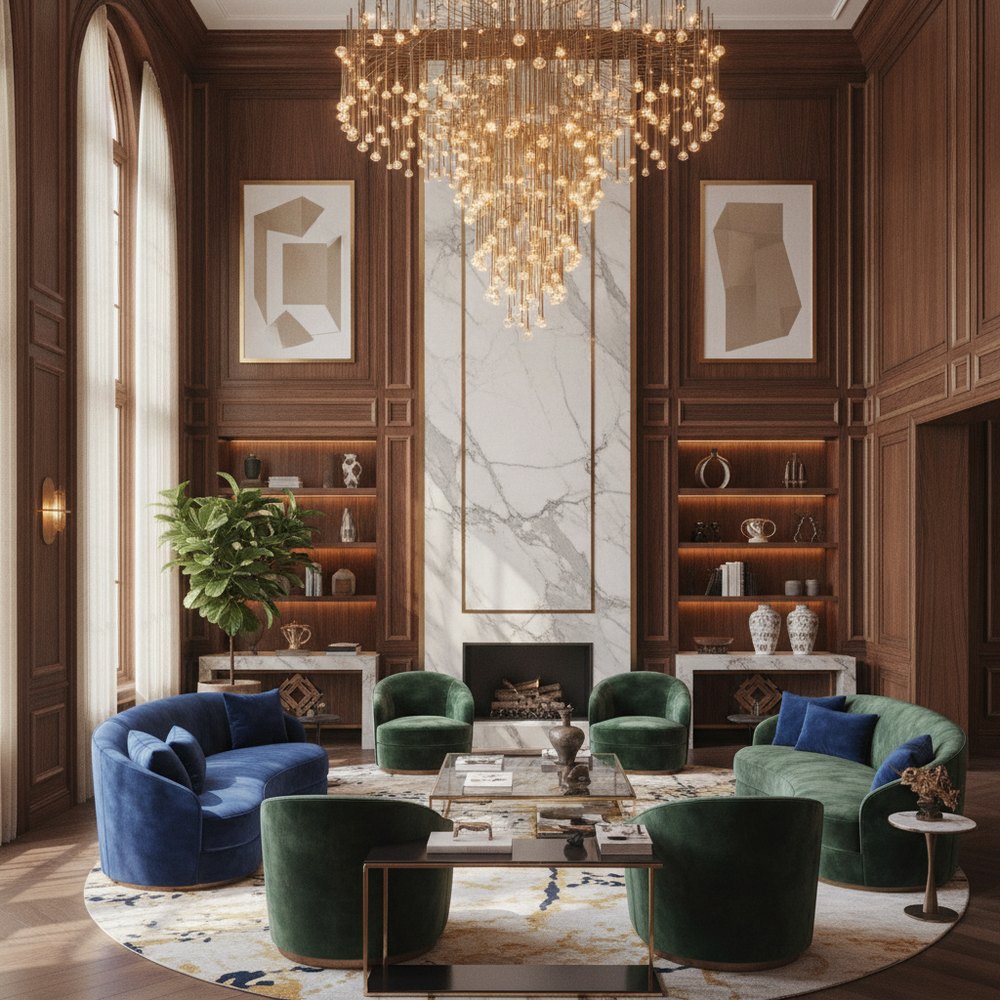
Traditional interior design is built on symmetry, quality natural materials, layered pattern and furniture with visible craft: turned legs, panelled doors, upholstered seating, and antiques mixed with new. Updated versions keep the symmetry and the materials but cut the pattern volume and lighten the palette.
What actually defines traditional design
The word gets used loosely to mean anything that is not modern, which is not helpful. Traditional design in the interior sense draws mainly on 18th and 19th century European and American domestic interiors, and it has recognisable rules.
Symmetry is the first and most important. A pair of lamps, a pair of chairs facing each other, a fireplace flanked by matching alcoves. Traditional rooms are composed around an axis, and that composure is what makes them feel settled.
The second is material honesty and craft. Solid timber, natural stone, wool, linen, leather, brass. Furniture with turned legs, carved details, panelled fronts, evidence that a person made it.
The third is layering: pattern on pattern, rug on floor, curtains and blinds, cushions and throws. Traditional rooms are not minimal, and the density is deliberate.
Why it fell out of favour and is coming back
Traditional design became unfashionable for the same reason it is returning: it is the opposite of the grey open-plan minimalism that dominated the 2010s.
At its worst it deserved the criticism. Heavy swagged curtains, dark varnished reproduction furniture, chintz everywhere, and rooms that felt closed and airless. It read as fussy and unrelated to how people actually live.
What is bringing it back is the exhaustion with the alternative. After a decade of pale grey and open shelving, a room with pattern, colour, comfortable upholstery and things that have been repaired rather than replaced feels human. The current version, often called new traditional or grandmillennial, keeps the warmth and drops the formality.
The updated version, element by element
How to get traditional character without the period-drama result.
- Keep the symmetry. This is the element that does the most work and costs nothing. Pairs of lamps, balanced arrangements, a clear focal point.
- Lighten the palette. Traditional does not have to mean dark green and burgundy. The same furniture in a room of soft plaster, warm white and one muted colour reads current.
- Reduce the pattern count. Two patterns in a room rather than five, with one clearly dominant. A patterned rug plus plain upholstery, or plain floor plus patterned curtains.
- Mix in one modern element. A contemporary light fitting, a modern piece of art, or a plain modern sofa among antiques stops the room reading as a museum.
- Simplify the window treatment. Plain, generous, floor-length curtains on a simple pole instead of pelmets, swags and tie-backs.
Furniture: mixing old and new
The single most reliable route to a traditional room that feels alive rather than staged is to mix periods deliberately.
A room furnished entirely in one period is a reconstruction. A room where an 18th-century chest sits beside a plain modern sofa, under a contemporary pendant, on an antique rug, reads as somewhere that has been lived in and added to.
The practical rule is roughly one third antique or vintage, two thirds new, with the antiques being the pieces where craft shows: a chest, a mirror, a pair of chairs, a table. Buy new for the things you sit on daily, since old upholstery is rarely comfortable and reupholstering costs more than people expect.
Pattern, used properly
Traditional design is where pattern lives, and the reason it goes wrong is scale rather than quantity.
The rule that works is to vary the scale: one large-scale pattern, one medium, one small, and let the large one lead. A large floral on the curtains, a medium stripe on a chair, a small geometric on a cushion. All three at the same scale competes; all three at large scale is chaos.
Keep a common colour running through them, and use plain fabric for the largest upholstered piece so the eye has somewhere to rest. Our guide to how to mix colours covers the palette side.
Architectural detail
Traditional interiors rely on architecture more than most styles, and in a house without it, adding some is often the highest-value change.
Cornice, skirting of a decent height, panelling to dado level, and architrave around doors give a plain modern room the bones that traditional furniture needs. Without them, antiques in a box room look like they are visiting.
The key is proportion. Skirting should be generous, typically 150 to 200mm in a room with normal ceilings, and cornice should be scaled to the ceiling height. Undersized mouldings look worse than none at all.
Paint all the woodwork the same colour, either matching the walls for calm or contrasting for definition. Multiple woodwork colours in one room is what makes a period scheme look busy.
Traditional versus transitional
These get confused constantly and the distinction is genuinely useful when shopping.
Traditional is committed: symmetrical, patterned, ornamented, with furniture that carries visible period detail. Transitional is the halfway house: traditional forms with the ornament stripped out, in a restrained palette, mixed with contemporary pieces. A transitional room might have a classic rolled-arm sofa in plain linen with a modern coffee table and no pattern at all.
If you like the comfort and symmetry of traditional but not the pattern and ornament, what you actually want is transitional. Our transitional design guide covers it in full.
Test it in your room
Traditional is a style where the difference between rich and heavy is a matter of degree, which is exactly what is hard to judge from photographs.
With Decorly you can photograph your room and compare a full traditional scheme against a lightened, updated version at your real proportions before buying furniture. For related styles, see transitional interior design and French country interior design.
Frequently asked questions
What is traditional interior design?
A style built on symmetry, quality natural materials, layered pattern and furniture with visible craft such as turned legs and panelled fronts. It draws mainly on 18th and 19th century European and American domestic interiors, and it is deliberately layered rather than minimal.
How do you make traditional design look modern?
Keep the symmetry and the materials, but lighten the palette, cut the number of patterns to two with one dominant, simplify the window treatments to plain floor-length curtains, and add one clearly modern element such as a contemporary light or piece of art.
What is the difference between traditional and transitional design?
Traditional is committed to symmetry, pattern and period ornament. Transitional keeps traditional furniture forms but strips the ornament, uses a restrained palette and mixes in contemporary pieces. If you like the comfort but not the pattern, transitional is what you actually want.
How do you mix antique and modern furniture?
Roughly one third antique or vintage to two thirds new, with the antiques being pieces where craft shows, such as a chest, mirror or pair of chairs. Buy new for anything you sit on daily, since old upholstery is rarely comfortable and reupholstering costs more than expected.