Styles
Japandi Style: The Complete Guide
July 11, 2026 · 9 min read
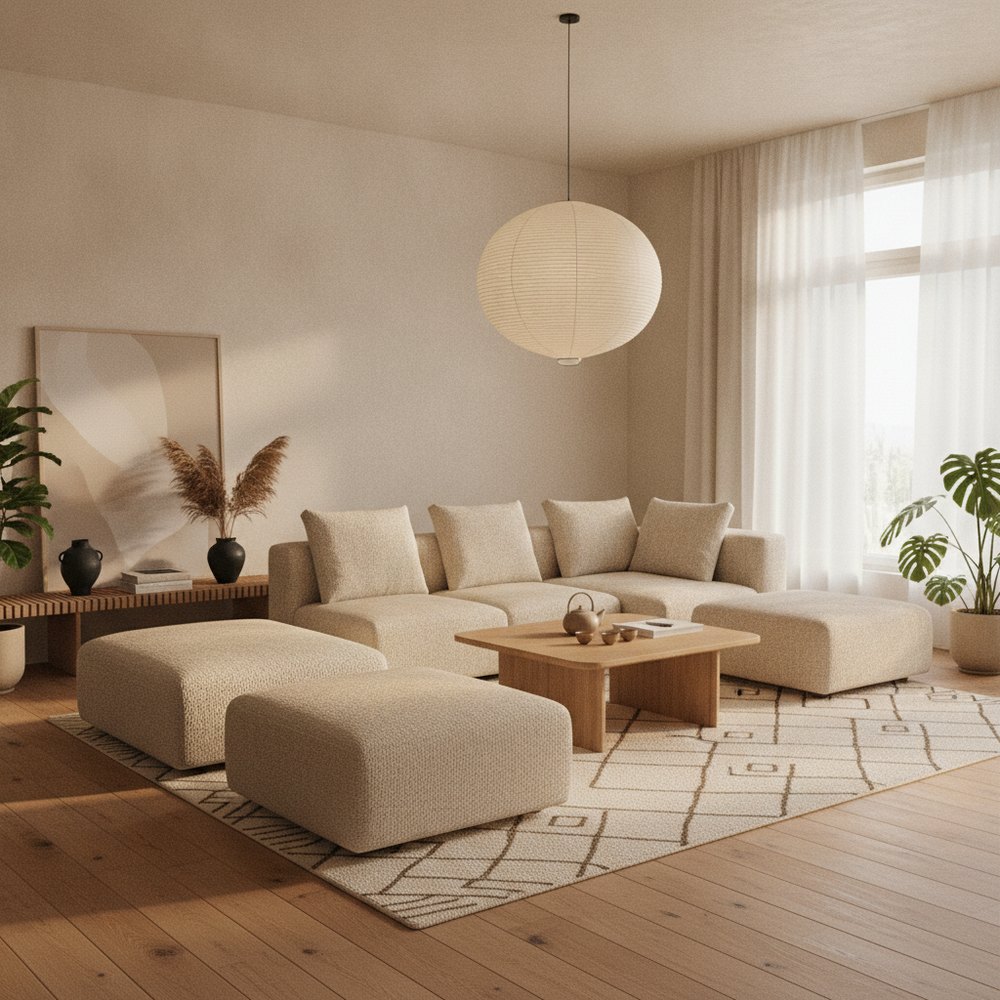
Japandi is a hybrid style that fuses Japanese wabi-sabi with Scandinavian hygge. It pairs low, handcrafted furniture, muted earthy tones and natural materials with warmth and function — creating serene, grounded, clutter-free rooms that celebrate imperfection, craftsmanship and negative space rather than gloss, colour or excess.
What is Japandi style?
Japandi is the meeting point of two design cultures that, on the surface, sit far apart — yet share a surprising amount. From Japan it takes wabi-sabi: a reverence for natural imperfection, quiet materials and empty space. From Scandinavia it takes hygge: warmth, comfort and light-filled function. Together they make rooms that are minimal but never cold, refined but never fussy.
The result is a calm, tactile home built from wood, stone, paper, clay and linen in a muted palette. It is close cousin to both Scandinavian design and minimalism, but it is warmer and earthier than the first and softer than the second. If you love clean lines but find pure minimalism a little severe, Japandi is often the answer.
Wabi-sabi meets hygge: the origins
Wabi-sabi is a centuries-old Japanese worldview rooted in Zen aesthetics that finds beauty in the imperfect, impermanent and incomplete — a hand-thrown bowl with an uneven glaze, timber that shows its grain, the patina of age. Hygge, by contrast, is the modern Danish pursuit of cosy, unhurried contentment.
Japandi emerged as designers noticed how naturally these philosophies fit. Both prize craftsmanship over mass production, both love honest natural materials, and both are more interested in how a space feels than in showing off. Rather than a passing trend, Japandi reads as a considered blend of two enduring traditions — which is exactly why it feels timeless. Explore how it compares in our roundup of the best interior design styles for 2026.
The Japandi colour palette
The Japandi palette is warmer and more grounded than Scandinavian. Think of the colours of the earth and of raw materials: clay, stone, bark, oatmeal and ink. Contrast is gentle, and darker tones are used to add depth and weight rather than drama.
- Warm neutrals — oatmeal, taupe, mushroom and unbleached linen.
- Earthy browns — walnut, clay, terracotta and coffee.
- Muted greens and blues — sage, olive, eucalyptus and dusty slate.
- Soft blacks and charcoal — for grounding and quiet contrast.
- Cream and stone — as a calm, low-glare backdrop instead of stark white.
Materials, craft and texture
Craftsmanship is the beating heart of Japandi. Every material should look and feel real, and small imperfections are welcomed, not hidden — a knot in the wood, the throw of a hand-made ceramic, the slub of raw linen. Choose matte over glossy, and honest over synthetic, every time.
- Natural wood — walnut, oak and bamboo, often with a matte or oiled finish.
- Handmade ceramics — stoneware, raku and imperfect glazes.
- Paper and rice-paper — screens, shades and pendant lanterns.
- Linen and raw cotton — relaxed, unironed, breathable textiles.
- Stone and concrete — for tabletops, basins and grounding weight.
- Rattan, jute and tatami-like weaves — soft natural flooring and accents.
Low furniture and floor-level living
One of the most recognisable Japandi signatures is low-slung furniture. Platform beds close to the floor, low sofas, short-legged coffee tables and floor cushions all draw the eye down and open up the volume of the room above. This borrowed-from-Japan proportion instantly makes a space feel calmer and more spacious.
Keep silhouettes simple, honest and a little sculptural. Favour solid wood joinery over veneer, and let each piece stand slightly apart so its craftsmanship is visible. In the bedroom especially this look is transformative — see our Japandi bedroom ideas for how a low platform bed and a pared-back nightstand reset an entire room, and browse more bedroom designs for context.
Lighting for a Japandi home
Japandi lighting is soft, warm and diffused — closer to lantern-light than spotlight. Paper and rattan shades scatter the glow, mimicking the filtered daylight of a shoji screen, and warm bulbs keep everything gentle. Avoid bright, cool, evenly-lit ceilings; the style thrives on shadow and gradient.
Layer a sculptural paper or rattan pendant over the main zone, add a low table lamp for a pool of warmth, and let daylight filter through linen or bamboo blinds rather than blast in. Dimmers help you shift the mood from day to evening. For a full walkthrough of layering light, read the best lighting for every room.
Nature, negative space and 'ma'
Japandi treats empty space as a design element in its own right — the Japanese concept of ma, the meaningful pause between objects. Resist the urge to fill every surface; the calm you feel in a Japandi room comes as much from what is left out as from what is put in.
Bring the outside in with a few intentional touches of nature: a single branch in a stoneware vase, a bonsai or a sculptural plant, a bowl of stones. One perfect object, well placed, says more than a shelf of clutter. This restraint is what gives the style its quiet, meditative quality.
How to get the Japandi look
Use these steps to bring Japandi into a room. You can test each stage on a photo of your own space with Decorly before you commit to furniture or paint.
- 1Warm up the shell — swap stark white for cream, stone or a muted greige on the walls.
- 2Lower the furniture — a platform bed, a low sofa and a short coffee table to open the volume.
- 3Commit to one or two warm woods — walnut with oak, kept matte, repeated across the room.
- 4Choose handcrafted over perfect — stoneware, hand-thrown ceramics and honest linen with visible texture.
- 5Diffuse the light — paper or rattan shades, warm bulbs and dimmers instead of bright overheads.
- 6Leave deliberate empty space — clear most surfaces and let a few objects breathe.
- 7Add one gesture of nature — a branch, a bonsai or a single sculptural plant.
Common Japandi mistakes
- Cold, grey minimalism — Japandi should feel warm and earthy; too much grey and white tips it into austere Scandinavian.
- Glossy or synthetic finishes — plastic, high-shine lacquer and faux materials break the hand-made spirit.
- Over-decorating — cramming shelves and surfaces destroys the negative space the style depends on.
- Loud, saturated colour — bright accents fight the muted, grounded palette; keep colour soft and natural.
- Buying a 'Japandi set' — matching everything from one range looks staged; mix craft, age and origin.
- Harsh, cool lighting — bright white light flattens the mood; warmth and shadow are essential.
Frequently asked questions
What is the difference between Japandi and Scandinavian design?
Japandi is warmer, earthier and lower to the ground. It borrows Scandinavian light and function but adds Japanese wabi-sabi — deeper woods, muted earthy tones, handcrafted imperfection and floor-level furniture — so it feels more grounded and tactile.
What colours define Japandi style?
Warm, earthy neutrals: oatmeal, taupe, clay and mushroom, deepened with walnut brown, soft charcoal and muted greens like sage and olive. The palette is low-contrast and grounded rather than bright white.
Is Japandi good for small apartments?
Very. Low furniture, a calm palette and disciplined empty space make small rooms feel larger and more serene, and the built-in restraint keeps clutter under control.
What is wabi-sabi in Japandi design?
Wabi-sabi is the Japanese appreciation of natural imperfection and impermanence — the beauty of a hand-thrown bowl, weathered wood or an uneven glaze. In Japandi it means choosing honest, handcrafted, slightly imperfect materials over flawless factory finishes.
How can I preview Japandi on my own room?
Upload a photo to Decorly, choose the Japandi style, and get a photorealistic redesign in seconds that keeps your real layout — an easy way to see the palette and low furniture in your actual space first.