Rooms
Kitchen Storage Ideas: Drawers, Zones and the Pantry Question
August 12, 2026 · 9 min read
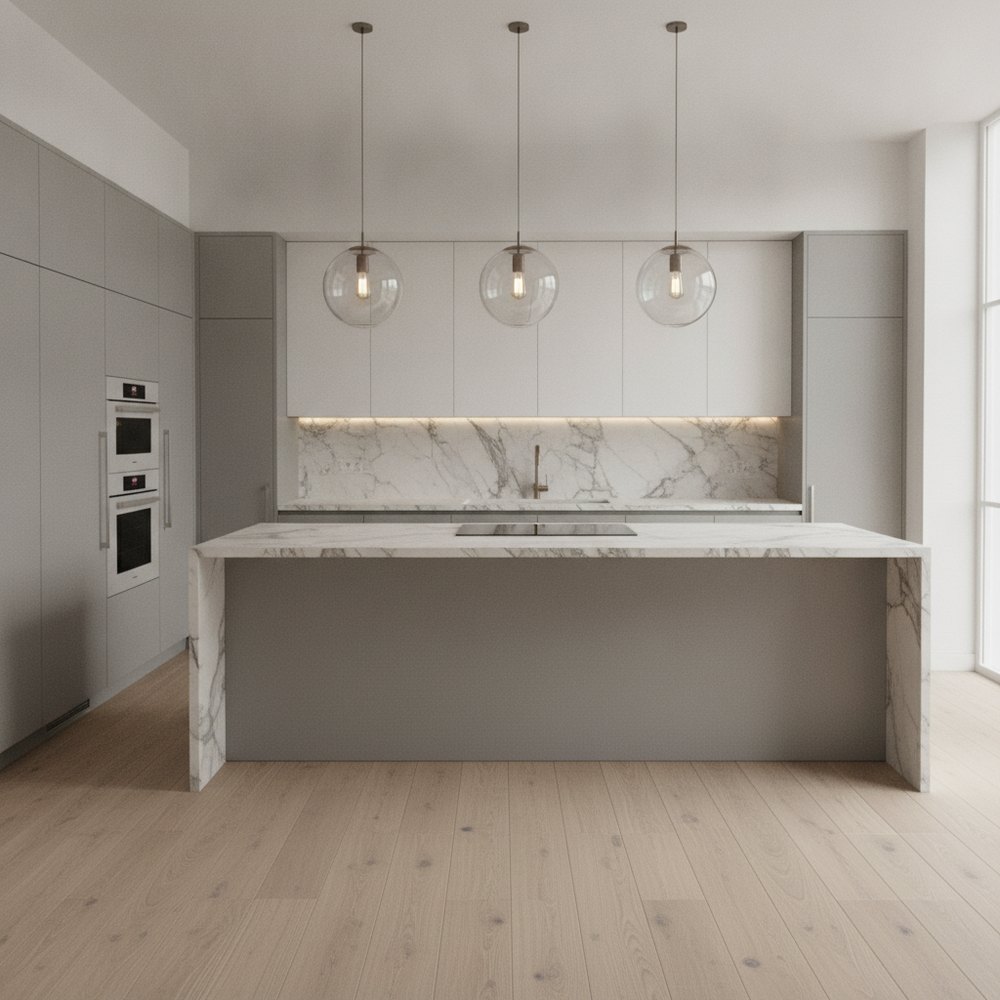
The two changes that fix most kitchen storage are replacing base cupboards with deep drawers, so you can see everything without kneeling, and organising the kitchen into zones, cooking, prep, washing, food, so items live where they are used. Both matter more than adding more cupboards.
Storage problems are usually layout problems
When a kitchen feels short of storage, the instinct is to add more cupboards. Often the actual problem is that the storage is in the wrong place relative to how the kitchen is used.
The symptom is walking. If you carry pans from one end of the kitchen to the hob, cross the room for a chopping board, and go back for a knife, the kitchen is fighting you, and no additional cupboard fixes that.
Fixing it means grouping things by activity rather than by category. Pans, oils, utensils and seasoning near the hob. Knives, boards and bins near the main prep run. Dishwasher next to the sink with crockery storage directly above or beside it. Dry goods together in one place. It is not glamorous and it is the difference between a kitchen that works and one that annoys you daily.
Why drawers beat cupboards below the worktop
This is the highest-value storage decision in a kitchen and it is worth understanding why.
A base cupboard is a deep box you access from the front. Everything at the back is invisible and requires kneeling and reaching. In practice most people use the front third and forget the rest, which means a 600mm cupboard functions as a 200mm one.
A drawer brings the contents to you. You look down and see everything at once, right to the back. Deep pan drawers hold more usable volume than the cupboard they replace, and they do not require you to get on the floor.
The counterargument is cost, since drawer runners are more expensive than a hinge and a shelf. It is one of the few kitchen upgrades that repays the difference every single day.
The storage upgrades worth paying for
Kitchen suppliers offer dozens of internal accessories. These are the ones that consistently earn their price.
- Deep pan drawers, 200 to 300mm high, under the hob. The single best upgrade.
- A tall pull-out larder. Full-height, pulls out entirely, both sides accessible. Holds a startling amount and everything is visible.
- A corner solution. Any corner cupboard without a pull-out mechanism is dead space. A carousel or a pull-out is not optional there.
- Under-sink pull-out, shaped around the trap, which recovers the least usable cupboard in the kitchen.
- Integrated bins, ideally two or three, in a pull-out next to the prep area. Where the bin lives determines whether recycling happens.
- Drawer dividers. The cheapest item on this list and the one that stops a large drawer becoming a pit.
The pantry question
A walk-in pantry is the thing everyone wants and it is not always the right answer.
A walk-in pantry needs about 1.2 x 1.5 metres minimum to be useful, which in most kitchens means giving up a run of cabinetry or part of another room. If you have the space, it is excellent: it holds bulk goods, hides small appliances, and takes the visual clutter out of the kitchen.
If you do not, a tall pull-out larder unit gives you perhaps 70 per cent of the benefit in 600mm of run. And a well-organised pair of full-height cupboards with pull-out shelves gets you most of the rest.
The version worth considering is the appliance cupboard: a full-height cabinet with a worktop inside at 900mm, a socket, and doors that fold back. Kettle, toaster and coffee machine live in it, plugged in and ready, and the doors close. It is the single most effective way to clear a worktop.
Open shelving, honestly
Open shelving photographs beautifully and divides people sharply in practice.
It works if you own attractive, matching, frequently used items and you cook often enough that nothing sits long enough to gather dust and grease. In a busy kitchen with a mixed collection of crockery, it becomes visual noise within a week.
The compromise that works is one short run of open shelving for the things you use daily and genuinely like, with everything else behind doors. Position it away from the hob, since anything within a metre or so of a hob gets a film of oil.
Our guide to small kitchen ideas covers where shelving helps in a tight space.
Storage in a small kitchen
When there is no room to add cabinets, the gains come from using space that is already there.
- 1Take wall units to the ceiling. The gap above standard wall units is wasted volume and a dust trap. A cupboard to the ceiling adds a full extra shelf for rarely-used items.
- 2Use the toe kick. Shallow drawers in the plinth hold baking trays and flat items.
- 3Rails and hooks on the splashback wall for utensils, freeing a drawer.
- 4The back of cupboard doors for spice racks, bin bags and cloths.
- 5A magnetic knife strip rather than a block, which reclaims worktop.
Keeping the worktop clear
Worktop clutter is what makes a kitchen feel small and disorganised more than cupboard contents ever do, and it accumulates for a simple reason: things that are used daily need to be reachable.
The solution is not discipline, it is giving the daily items a home that is still reachable. An appliance cupboard for the kettle and toaster. A single tray or crock for utensils rather than several. Oils and salt in a drawer beside the hob rather than beside it. A wall-mounted rail for the things you use constantly.
The test is whether every single item on the worktop is used daily. If it is used weekly, it belongs in a cupboard, and if it is used monthly it probably belongs somewhere else entirely.
Plan it before you order
Kitchen storage is decided at the point the cabinetry is specified, and changing it afterwards means new carcasses.
With Decorly you can photograph your kitchen and see different configurations, drawers against cupboards, a tall larder against more wall units, rendered in your own space before you sign off a design. For the rest of the kitchen, see modern kitchen remodeling and small kitchen ideas.
Frequently asked questions
Are drawers better than cupboards in a kitchen?
Below the worktop, yes. A cupboard is a deep box you access from the front, so the back becomes invisible and most people use only the front third. A drawer brings everything to you at a glance and holds more usable volume. It costs more and repays it daily.
How do I organise a kitchen properly?
By zone rather than by category. Pans, oils and utensils near the hob; knives, boards and bins on the main prep run; crockery beside or above the dishwasher; dry goods together. If you are walking across the kitchen for basic tasks, the layout is the problem, not the amount of storage.
Do I need a walk-in pantry?
Only if you have 1.2 x 1.5 metres to give it. A tall pull-out larder unit delivers around 70 per cent of the benefit in 600mm of run. An appliance cupboard with an internal worktop and socket, where the kettle and toaster live behind doors, often does more for the room.
How do I get more storage in a small kitchen?
Take wall units to the ceiling rather than leaving a dust gap, use the plinth for shallow drawers, hang utensils on a splashback rail, fit racks to the back of cupboard doors, and swap a knife block for a magnetic strip to reclaim worktop.