Guides
How to Make a Room Look Bigger (and What Won't)
July 25, 2026 · 8 min read
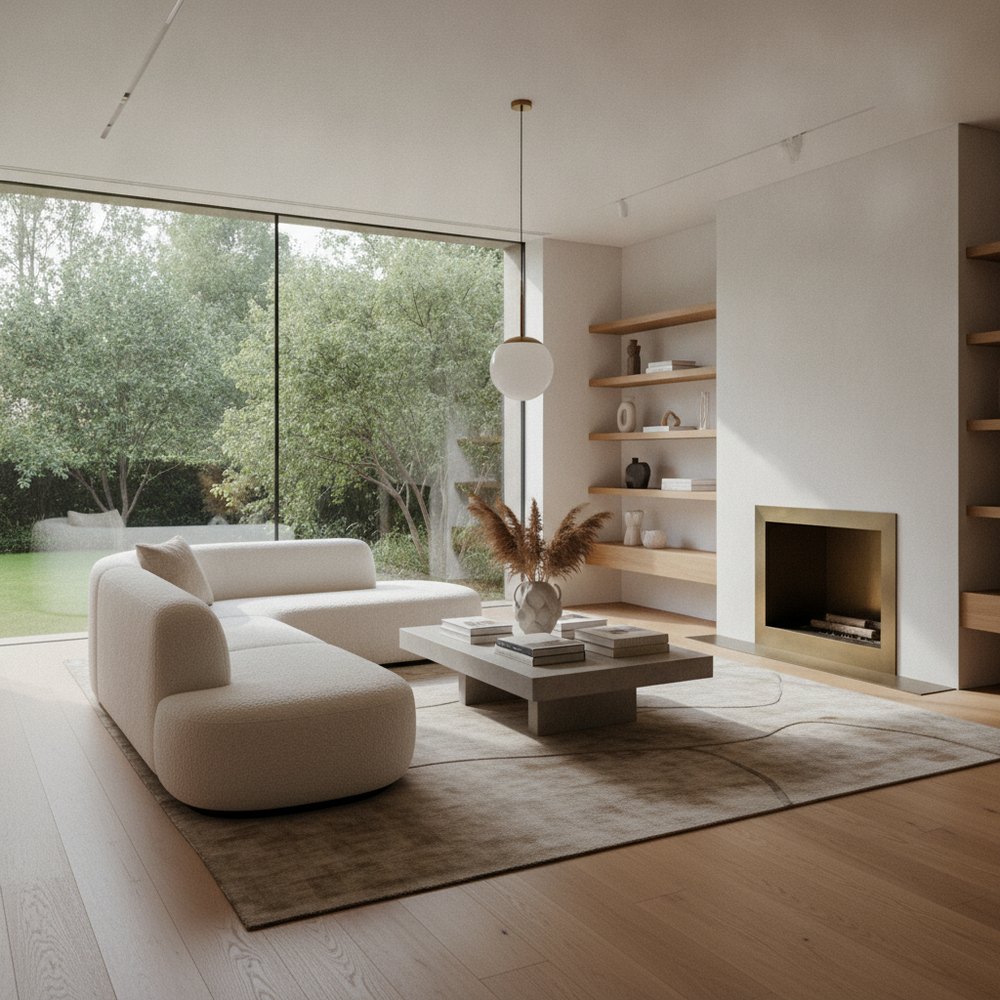
You cannot add square metres with decor, but you can change how big a room reads. The levers that genuinely work: more light, a pale and consistent colour, furniture scaled to the room, clear sightlines to the far wall and floor, and a mirror placed to bounce light. Everything else is fiddling.
What actually makes a room look bigger?
A room feels small for two reasons: the eye keeps hitting walls and clutter before it can travel, and the light runs out before it reaches the corners. Almost every real trick for enlarging a space is doing one of those two jobs — letting the eye travel further, or carrying light deeper.
So the honest hierarchy goes: light first, then how much floor and wall you can see, then the scale of what sits in the room, then colour, then a well-placed mirror to finish. Notice that buying more storage baskets and clever gadgets is nowhere on that list. Space is mostly about editing and sightlines, not products.
Does light really make a room feel larger?
More than colour, more than mirrors, more than anything. A dim room feels small because you cannot see its edges; the moment light reaches the far corners, the brain reads the full volume and the room grows.
Start with the daylight you have. Pull curtains right back off the glass so nothing eats the window, keep sills clear, and clean the panes — grubby windows quietly cost you a stop of light. After dark, the fix is layers: a couple of lamps in the far corners doing more work than one bright ceiling light in the middle. A single central pendant flattens a room and leaves the edges gloomy, which makes it read smaller than it is. Our best lighting for every room guide covers the layering in detail.
What colours make a room look bigger?
Pale, warm and consistent. Light walls reflect more light into the room, and keeping the walls, trim and ceiling in close tones stops the eye snagging on hard lines that chop the space into pieces. Paint the skirting the same white as the walls and the room reads taller and less busy.
But here is a myth worth killing: white does not automatically make a room look bigger. A cold, stark white in a north-facing room with poor light just reads grey and grim, which shrinks it. And a small, dark room painted a deep moody colour can feel bigger by dissolving the corners into shadow so you cannot tell where the walls stop. Colour works through light and contrast, not through some rule that pale equals large. If you want to go dark, commit fully — walls, ceiling and trim — and let the edges disappear.
How does furniture scale change how big a room feels?
This is the one most people get backwards. Cramming a small room with lots of small, spindly furniture makes it look smaller and more cluttered, not bigger. The eye counts the pieces and reads chaos.
Fewer, better-scaled pieces win. One properly sized sofa beats a two-seater plus two tub chairs plus a pouffe. Choose furniture that sits low — a low-backed sofa, a low bed — because the extra wall above it reads as air and height. And lift things off the floor: sofas and sideboards on legs let you see the floor running underneath, which the brain reads as more space. A skirted sofa that sits flat on the ground blocks that sightline and squats heavily in a small room.
- Buy fewer, larger pieces rather than many small ones — clutter shrinks a room faster than size.
- Go low. Low sofas and beds leave more visible wall above, which reads as height.
- Choose furniture on legs so the floor flows underneath and the piece looks to float.
- Leave a gap between furniture and the walls where you can — pushing everything hard against the edges rarely helps as much as people think.
Why do sightlines and floor continuity matter so much?
A room feels as big as the longest distance your eye can travel across it. Anything that interrupts that journey — a high-backed chair mid-floor, a rug that stops short, a change of flooring in a doorway — chops the space and makes it read smaller.
So clear the routes. Keep the floor visible and continuous: the same flooring flowing from room to room, and through a doorway into the next space, stretches both rooms because the eye does not stop at the threshold. A pale, plain floor does this better than a busy patterned one. And leave a clear path from the door to the far window, so the first thing you see on entering is the deepest point of the room, not the back of a wardrobe.
Where should you actually put a mirror?
Mirrors work, but not by magic and not just anywhere. A mirror makes a room bigger by bouncing light and by suggesting the space continues. Which means placement is everything.
Hang a large mirror opposite or beside a window so it reflects the daylight and the view back into the room — that doubles the sense of light and depth. A mirror facing a blank wall or a cluttered shelf just reflects a blank wall or clutter, and does nothing. Bigger is better: one generous mirror beats a gallery of tiny ones. Lean a tall mirror against the wall and it draws the eye up as well as out. Skip the trend of mirrored furniture and mirror mosaics — they sparkle but they do not enlarge.
Which small-room 'tricks' are actually myths?
A few pieces of received wisdom do not survive contact with a real room. Worth knowing before you rearrange everything.
- "Always paint a small room white." Only if it has decent light. In a dark room a cold white reads grey and dreary; a warm tone or even a deep, enveloping colour often works better.
- "Push all the furniture against the walls." This can leave a dead void in the middle and rarely helps as much as claimed; floating a piece slightly forward can improve flow.
- "Small furniture suits small rooms." Usually the opposite — a few well-scaled pieces read calmer than a scatter of dinky ones.
- "Vertical stripes make walls look taller." Marginal at best, and easily undone by a busy room. Continuous colour does more.
- "Mirrors anywhere make a room bigger." Only when they reflect light or a view. Facing a wall, a mirror is just a wall.
How can you test what actually enlarges your room?
The catch with all of this is that light, colour, scale and layout interact — a change that opens up one room can flatten another, and you only really know once it is done. Repainting and rearranging to find out is slow and, if you buy the wrong sofa, expensive.
Seeing it on your actual room first takes the gamble out. With Decorly you upload a photo of the space and generate redesigned versions in seconds — a paler wall colour, lower furniture, a continuous floor, a mirror by the window — on your real proportions and light, so you can judge what genuinely opens the room before spending a penny. Our small living room ideas piece is a good next read.
Frequently asked questions
What is the single best way to make a room look bigger?
Get more light into the corners. A room reads small mainly because the eye can't see its edges, so maximise daylight by clearing the windows, and after dark use a couple of lamps in the far corners rather than one central ceiling light. Light reaching the edges makes the whole volume read.
Do light colours always make a room look bigger?
No. Pale walls help when a room has decent light, because they reflect it around. But a cold white in a dark, north-facing room can read grey and gloomy, which shrinks it. A small dark room painted a deep colour can actually feel bigger by dissolving the corners into shadow.
Does bigger furniture really work in a small room?
Often, yes. A few well-scaled pieces read calmer than lots of small ones, which just look cluttered. Choose low furniture on legs so you see wall above and floor beneath — both read as space. The mistake is filling a small room with many spindly items.
Where should I hang a mirror to make a room look bigger?
Opposite or beside a window, so it bounces daylight and the view back into the room and suggests the space continues. A mirror facing a blank or cluttered wall does nothing. Go large — one generous mirror beats several small ones, and mirrored furniture doesn't enlarge a room.
Does keeping the same flooring throughout make rooms look bigger?
Yes. Continuous, pale flooring that flows from room to room and through doorways stops the eye at fewer points, so connected spaces read larger. A change of floor at a threshold visually chops the rooms apart, which makes each feel smaller than it is.