Guides
How to Choose a Rug (and Get the Size Right)
July 25, 2026 · 8 min read
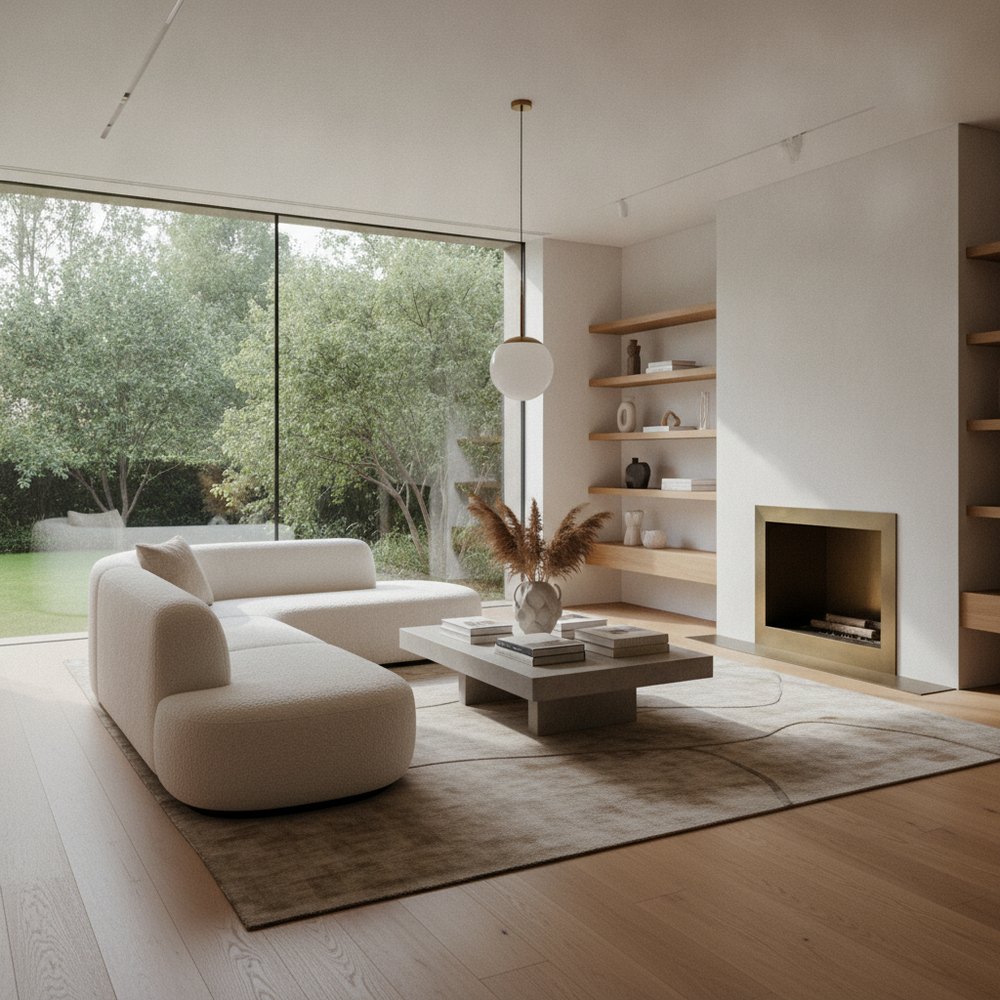
Most rugs are bought too small. The fix is a size rule per room: in a living room get the front legs of every sofa and chair onto the rug at minimum, under a dining table the rug must clear the pulled-out chairs, and in a bedroom let it spill out either side of the bed. Size first, material second, colour last.
Why are most rugs too small?
There is an epidemic of tiny rugs, and it comes down to two things: the big-enough size costs more, and people buy the rug before they think about the furniture. So a 120x170cm rug ends up marooned in the middle of a living room like a bath mat that wandered in, with every sofa and chair sitting off it on bare floor.
A rug that is too small does the opposite of its job. Instead of pulling the seating into one grounded group, it shrinks the arrangement and makes the whole room feel cheaper and more disjointed. The single most useful thing we can tell you: when in doubt, size up. A rug that feels slightly too big in the shop is usually right at home; one that feels right in the shop is usually too small once it is down.
What size rug do you need in a living room?
The rug's job in a living room is to gather the seating into one zone, so it needs to relate to the furniture, not float free of it. There are three accepted approaches, and only the first one is a genuine mistake.
- All legs off (the mistake): a small rug with every piece of furniture sitting around it on the floor. It looks stranded and shrinks the room — avoid it.
- Front legs on (the reliable minimum): the rug tucks under the front legs of the sofa and armchairs, linking them into a group. This is the safe, affordable default and works in most rooms.
- All legs on (the generous look): the rug is large enough that every piece of furniture sits fully on it, with floor showing around the edges. It feels the most luxurious and pulls the room together best, if the budget stretches.
How big should the rug actually be?
Rules of thumb we lean on. In a living room, aim to leave a consistent border of bare floor — roughly 20–40cm — between the rug edge and the walls, rather than carpeting the room wall to wall with an area rug. The rug should be at least as wide as the sofa, and ideally wider, so the sofa does not overhang the ends.
As a starting point, a small living room usually wants a 160x230cm rug, a medium room a 200x290cm, and a larger room a 240x330cm or bigger. If you are between two sizes, take the larger one — it is the more common regret to go too small. And measure the actual floor with masking tape before ordering; taping out the rectangle on the floor tells you more than any measurement on a page.
How do you size a rug under a dining table?
This is the one with a hard rule, because it is about function, not just looks. The rug under a dining table must be big enough that when you pull a chair out to sit down, its back legs are still on the rug. If the chair catches the rug edge every time someone gets up, it will annoy you daily and the rug will wear at the edge.
In practice that means the rug should extend at least 60–75cm beyond every edge of the table — enough for the chair to slide back and stay on. Measure your table, add roughly 70cm all round, and buy to that. Match the rug shape to the table: rectangular rug under a rectangular table, round under round. And for a dining room, choose something flat and tightly woven you can sweep or wipe — a deep shag under a table where people eat is a decision you will regret by the second dinner party.
Where should a rug go in a bedroom?
In a bedroom the rug is mostly there for the first thing your feet touch in the morning, so it wants to sit where you step out of bed. The look that works is a large rug placed under the lower two-thirds of the bed, running out well past both sides and the foot.
You are after a generous margin of soft rug on each side — around 45–60cm — so you step onto wool, not cold floor. Slide the rug under the bed from partway down, leaving the headboard and bedside tables on the floor if you like, or put the whole bed on it if the rug is big enough. If a single large rug is out of budget, two runners either side of the bed do the practical job, though they never look as pulled-together as one big rug beneath it.
Which rug material should you choose?
Material decides how a rug feels, how it wears and how much grief it gives you. Match it to the room and the traffic before you fall for a pattern.
- Wool: the classic all-rounder — soft, hard-wearing, naturally stain-resistant and warm underfoot. Dearer, but it lasts for years and suits living rooms and bedrooms.
- Cotton: affordable, washable and casual; good for kitchens, kids' rooms and flatweaves, though it flattens faster than wool.
- Jute and sisal: natural, textured and hard-wearing, lovely for a relaxed or coastal look — but rough underfoot and a pain to clean if something spills.
- Polypropylene and synthetics: cheap, stain-resistant and fine for high-traffic or outdoor spots and homes with pets; they can look flat but have improved a lot.
- Viscose: silky and lustrous, but delicate, marks easily and hates moisture — best kept to low-traffic rooms, not under a dining table.
Should you layer rugs?
Layering — a smaller, characterful rug over a larger, plainer one — is a genuinely useful trick, not just a styling flourish. It is how you make a too-small rug you already own work, add warmth and texture, or bring a bold pattern into a room without committing the whole floor to it.
The reliable formula: a large, neutral, flat base — a jute or sisal is perfect — with a smaller wool or vintage-style rug on top, offset or angled. Keep enough of the base showing around the edge that it reads as deliberate. It also solves the practical problem of a lovely small rug that could never anchor a room on its own: lay it over a big plain base and it earns its place. For pulling the colours together across the whole scheme, our texture and layering guide goes further.
How can you test a rug in your room before buying?
A rug is a big-ticket item that photographs deceptively — colours read differently on your floor, in your light, and the scale never quite looks like the product shot. Ordering the wrong size or a colour that fights the sofa is an expensive, awkward thing to return.
Seeing it on your actual floor first removes the guesswork. With Decorly you upload a photo of the room and generate redesigned versions in seconds, testing rug sizes, colours and patterns against your real furniture and floor before you buy. Pair that with the masking-tape test on the actual floor and you will get the size right the first time.
Frequently asked questions
What size rug do I need for my living room?
Big enough to sit under at least the front legs of the sofa and armchairs, which links them into one group. As a rough guide, a small room wants around 160x230cm, a medium room 200x290cm, and a large room 240x330cm or more. If you're between sizes, go larger — too small is the common regret.
Should furniture sit on the rug or off it?
At minimum, get the front legs of every sofa and chair onto the rug so the seating reads as one grounded group. Better still, size up so all legs sit fully on the rug — it looks the most luxurious. Having all furniture off the rug, marooning it in the middle, is the mistake to avoid.
How big should a rug be under a dining table?
It must extend at least 60–75cm beyond every edge of the table, so that when a chair is pulled out to sit down its back legs stay on the rug. Measure the table, add roughly 70cm all round, and match the rug shape to the table — rectangular under rectangular, round under round.
Where should a rug go in a bedroom?
Place a large rug under the lower two-thirds of the bed so it runs out well past both sides and the foot, giving you around 45–60cm of soft rug to step onto each morning. If a single large rug isn't in budget, two runners either side of the bed do the job, though they look less pulled-together.
What is the best material for a rug?
Wool is the best all-rounder — soft, durable, warm and naturally stain-resistant — ideal for living rooms and bedrooms. Choose flatweave cotton for casual or washable spots, jute or sisal for texture, synthetics for high-traffic and pet homes, and keep delicate viscose to low-traffic rooms.