Rooms
Luxury Bathroom Design Ideas
July 11, 2026 · 8 min read
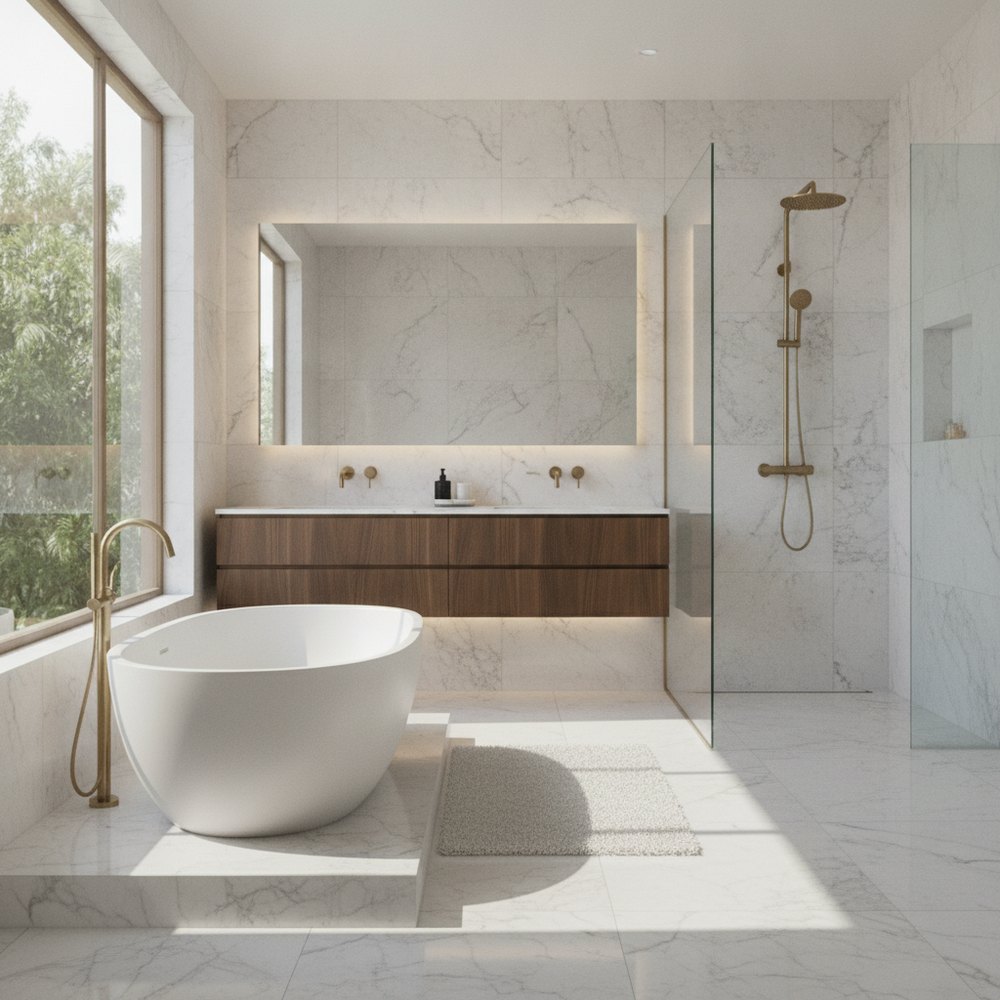
Luxury bathroom design is about atmosphere as much as materials: a calm spa feel built from natural stone and warm metals, a generous walk-in shower or freestanding bath, layered dimmable lighting, and a considered layout with room to breathe. Restraint and quality, not clutter, read as true luxury.
What makes a bathroom feel luxurious?
Luxury in a bathroom is a feeling of calm, space and quality — not a pile of expensive fittings. It comes from a considered layout with room to move, natural materials that age well, warm layered lighting, and the sensory details of a good hotel: soft-close everything, warmth underfoot, thick towels within reach, and quiet. Restraint reads as luxury; clutter never does.
The most convincing high-end bathrooms usually limit themselves to two or three materials repeated well, one strong focal point (a freestanding bath, a book-matched stone wall, a sculptural vanity), and lighting that flatters. Chasing every trend at once is what makes a bathroom look busy rather than rich. Our luxury villa interior ideas show the same principle across a whole home.
How do you plan a luxury bathroom layout?
Space is the ultimate luxury, so plan the layout to feel generous even when the room is not enormous. Give the eye a clear line to the best feature as you enter, keep the toilet out of the direct sightline (behind the door or a half-wall), and protect comfortable clearances — around 60cm in front of the basin and 70cm in front of the WC. A walk-in shower with a slim or frameless screen makes a small bathroom feel far larger than an enclosed cubicle.
If the room allows, separate the wet and dry zones and let the bath or a beautiful vanity be the first thing you see. Wall-hung fittings that reveal continuous floor underneath make the room feel more spacious and are easier to clean beneath — a small move with a big payoff.
Which materials say luxury?
A limited, well-chosen material palette is what separates a high-end bathroom from a busy one.
- Natural stone: marble, travertine or limestone for worktops, walls and floors — timeless and tactile.
- Large-format porcelain: the practical, lower-maintenance way to get a seamless stone look.
- Warm metals: brushed brass, bronze or matte nickel brassware for a richer feel than chrome.
- Timber: a warm wood vanity or bench to soften hard surfaces and add spa warmth.
- Glass and mirror: frameless shower screens and a generous mirror to expand light and space.
How do you create a spa atmosphere?
A spa feeling is built from warmth, softness and sensory calm. Underfloor heating is the single biggest upgrade — warm stone underfoot instantly reads as high-end. Add a freestanding bath as a sculptural centrepiece if you have the room, a generous rainfall shower head, a bench or niche in the shower, and a heated towel rail so towels are warm and dry.
Then soften the hard surfaces: a timber stool, a linen roman blind, a plant that tolerates humidity, and warm-toned lighting. Keep everyday clutter out of sight in closed storage so the surfaces stay serene. The goal is a room that lowers your shoulders the moment you walk in. Repetition is the trick — carrying one stone from the floor up into the shower, or matching every metal finish, is what makes a scheme feel designed rather than assembled, whether you lean contemporary or full luxury.
How should you light a luxury bathroom?
Bathroom lighting is where budgets are often let down. Move beyond a single ceiling downlight to layers: soft ambient light overall, shadow-free light at the mirror, and low-level accent light for atmosphere. Light the face from both sides at the mirror (vertical sconces or a backlit mirror) rather than only from above, which casts unflattering shadows.
Put everything on dimmers, use warm bulbs around 2700K, and add a discreet low-level or under-vanity glow for a calm night-time setting. Always check the IP rating for zones near the bath and shower, and consider a warm backlit mirror for a true spa feel. See the best lighting for every room for the layering method in detail.
How do you choose a vanity?
The vanity is the hardest-working piece in the bathroom and a major style statement. For a luxurious look, choose a wall-hung unit with a stone or stone-effect top, deep drawers rather than doors, and a finish that complements your materials — warm timber for softness, a lacquered colour for drama. A double vanity, where space allows, is one of the most appreciated everyday luxuries in a shared bathroom.
Match the tap and handles to the rest of the room's metalwork, choose an under-mounted or integrated basin for a clean line, and make sure there is enough surrounding worktop to actually use. Concealed storage inside keeps the surfaces clear, which is what keeps the room feeling calm.
How do you tile for a high-end look?
Tiling choices separate a smart bathroom from an ordinary one. A few principles carry most of the effect:
- Go large-format to minimise grout lines, which reads calmer and more expensive.
- Colour-match the grout to the tile so the surface looks continuous.
- Run the same tile from floor up into the wet zone to make a small room feel unified and larger.
- Book-match a stone or marble-effect slab behind the bath or vanity as a feature wall.
- Keep the palette tight — one hero surface plus one supporting material is plenty.
Which styles suit a luxury bathroom?
To trial stone, tile and metal combinations on your actual bathroom, upload a photo to Decorly and compare bathroom ideas or a specific luxury bathroom look in seconds, with your real layout preserved. A few directions to explore:
- Luxury: rich stone, warm metals and layered light for a hotel-suite feel.
- Contemporary: clean, current lines with softening natural materials.
- Modern: handleless vanities, large-format surfaces and understated calm.
- Japandi: timber, stone and serenity for a wellness-led spa bathroom.
Frequently asked questions
What makes a bathroom feel luxurious?
A calm, uncluttered layout, natural materials like stone and warm metals, layered dimmable lighting, and spa comforts such as underfloor heating and warm towels. Restraint and quality read as luxury far more than expensive fittings alone.
How do I make a small bathroom feel luxurious?
Use a frameless walk-in shower, wall-hung fittings that reveal the floor, large-format tiles with matched grout, a generous mirror, and warm layered lighting. Keeping surfaces clear does more than adding fittings.
What materials look most high-end in a bathroom?
Natural stone (marble, travertine, limestone) or large-format porcelain that mimics it, warm metals like brushed brass, and timber to add spa warmth. Repeating a limited palette is what makes it feel designed.
How should a luxury bathroom be lit?
In layers — soft ambient light, shadow-free light from both sides of the mirror, and low-level accent light — all on dimmers with warm bulbs around 2700K. Check IP ratings near the bath and shower.
Can I preview a luxury bathroom design before renovating?
Yes. Upload a photo to Decorly, choose a style, and see a photorealistic redesign of your bathroom in seconds — a simple way to test stone, tiling and layouts before committing.