Styles
Industrial Interior Design: The Complete Guide
July 12, 2026 · 10 min read
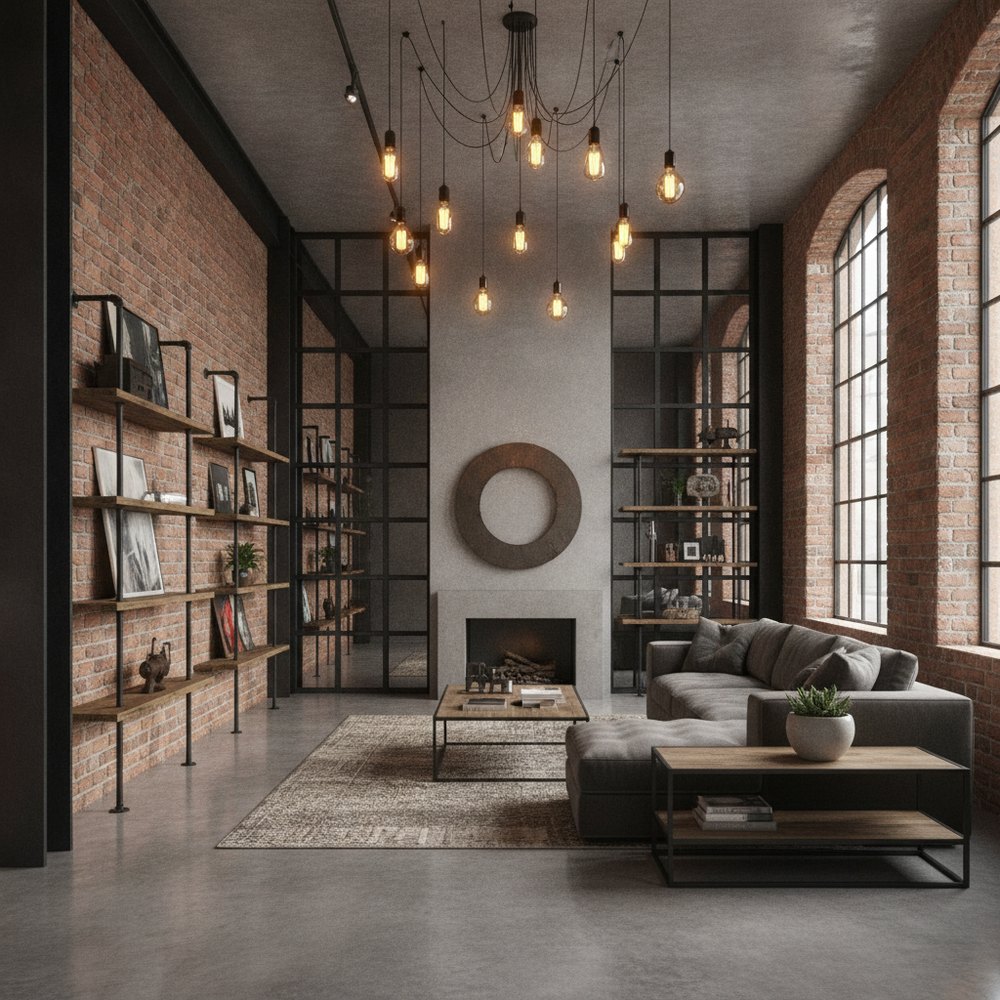
Industrial interior design celebrates raw, functional materials, exposed brick, metal, concrete and reclaimed wood, drawn from converted warehouses and factories. It favours open space, honest structure and a muted palette of greys, blacks and browns, softened with leather, timber and warm lighting for a lived-in, urban character.
What is industrial interior design?
Industrial design is a style that embraces the raw, utilitarian bones of a building rather than covering them up. Exposed brick, ductwork, steel beams and concrete are treated as features, giving rooms a stripped-back, honest and distinctly urban character.
The look originated in the conversion of old factories and warehouses into homes, where leaving structural elements bare was both practical and beautiful. That heritage is why authentic industrial spaces feel spacious, unpretentious and full of texture.
Done well, industrial is not cold. The best versions, often called warm industrial, balance hard materials with leather, timber, greenery and soft lighting so the space feels grounded and inviting rather than like an unfinished workshop.
Where did industrial style come from?
The style traces directly to the loft conversions of former industrial buildings, particularly in cities where large warehouses and factories were repurposed as housing. Rather than plaster over brick and hide pipework, residents celebrated these raw features.
This gave rise to the classic open-plan loft: high ceilings, large metal-framed windows, exposed structure and a sense of volume. Modern industrial interiors borrow that vocabulary and apply it to homes of any size and age.
- Warehouse conversions old factories reborn as open-plan urban homes.
- Honest structure brick, steel, concrete and pipework left deliberately exposed.
- Loft proportions high ceilings, big windows and open, flexible floor plans.
- Function-led heritage utilitarian fittings and salvaged, hard-wearing materials.
What are the defining features of industrial design?
Industrial interiors are defined by exposed materials and a sense of openness. Surfaces are raw and textural, brick, concrete, weathered metal, and structure is on show rather than concealed behind finishes.
The style also has a functional, salvaged spirit. Furniture and fittings often look robust and purposeful, with visible bolts, castors and welds that celebrate how things are made.
- Exposed brick and concrete raw walls and floors as a textural backdrop.
- Metal accents black steel, iron and aged metals in frames, legs and shelving.
- Visible structure ducts, pipes and beams left on show, not boxed in.
- Open, airy layouts high ceilings and uninterrupted, loft-style space.
- Reclaimed materials salvaged timber and vintage, hard-wearing fittings.
- Utilitarian furniture robust, functional pieces with an honest, worked look.
What is the industrial colour palette?
Industrial schemes are grounded in a muted, neutral palette that reflects the raw materials themselves. Greys, blacks, browns and the natural tones of brick and concrete dominate, creating a calm, masculine-leaning backdrop.
Warmth is layered in through timber, leather and metallics rather than bright colour. When accents appear, they tend to be deep and rich rather than pastel, keeping the mood grounded.
- Core neutrals charcoal, grey, black and off-white as the foundation.
- Raw material tones the browns and reds of brick, plus concrete greys.
- Warm timber reclaimed wood browns to soften the hard surfaces.
- Leather and rust tan, cognac and oxidised metallic tones for warmth.
- Deep accents forest green, deep blue or oxblood in small, considered doses.
Which materials and furniture define the look?
Material contrast is central to industrial design: the hardness of metal and concrete set against the warmth of leather and reclaimed timber. This tension is what gives the style its depth and stops it feeling flat.
Furniture is chosen for solidity and honesty. Pieces that combine wood and black metal, or that show their construction, sit naturally in the scheme, as do vintage and salvaged finds.
- Metal and wood pairings tables and shelving that combine timber tops with steel frames.
- Leather seating worn tan or brown leather sofas and armchairs.
- Reclaimed timber scaffold boards, aged planks and salvaged wood surfaces.
- Open metal shelving black pipe or steel shelving showing its structure.
- Vintage and salvage factory stools, lockers, castors and utilitarian pieces.
How should you light an industrial room?
Lighting is a defining feature of industrial style and a chance to add sculptural character. Fixtures reference factory and workshop origins, exposed bulbs, metal shades, cage guards and articulated arms.
Because the palette is dark and the materials matte, layered warm light is essential to keep a room inviting. Exposed Edison-style bulbs give a warm glow that flatters brick and metal alike.
- Exposed-bulb pendants Edison bulbs and metal-shade fixtures over tables and islands.
- Cage and factory lights metal guards and enamelled shades for authentic character.
- Articulated task lamps adjustable metal desk and floor lamps.
- Warm bulbs a warm colour temperature to offset the cool, hard surfaces.
How do you get the industrial look in a normal home?
You do not need a genuine warehouse to capture the style. The goal is to introduce raw texture, metal and warmth in balance, then edit so the room reads as intentional rather than unfinished.
Before you commit to brick slips or a concrete-effect wall, preview the scheme on your own space. Upload a photo to Decorly and generate an industrial version of your actual room, so you can test exposed brick, black-framed windows and leather against your real proportions and light in seconds.
- Add one raw surface an exposed-brick or concrete-effect feature wall sets the tone.
- Introduce black metal swap frames, legs, shelving and window trims to dark steel.
- Warm it up layer leather, reclaimed timber, a chunky rug and plenty of plants.
- Choose statement lighting exposed-bulb or cage fixtures do a lot of the work.
- Keep it open favour a few solid pieces and clear floor space over clutter.
- Preview first test the look on your own photo with Decorly before renovating.
What are common industrial design mistakes?
The biggest risk with industrial style is letting the hard materials take over until a room feels cold, grey and unwelcoming. A few adjustments keep it warm and liveable.
- Too cold all metal and concrete with no timber, leather or greenery to soften it.
- Over-theming faux rivets and factory props everywhere read as a costume, not a home.
- Poor lighting dark surfaces plus weak light make a room feel gloomy.
- No comfort forgetting rugs, cushions and soft textiles leaves it harsh underfoot.
- Ignoring scale in a small room, heavy dark surfaces can overwhelm; use them selectively.
Frequently asked questions
What is industrial interior design?
It is a style that celebrates raw, functional materials such as exposed brick, metal, concrete and reclaimed wood, drawn from converted warehouses and lofts. It favours open space and honest structure, softened with leather, timber and warm lighting.
What is warm industrial style?
Warm industrial keeps the raw materials and open feel of classic industrial design but balances them with reclaimed timber, leather, greenery, textiles and soft lighting. The result feels grounded and inviting rather than cold or unfinished.
What colours suit an industrial interior?
Industrial schemes are built on muted neutrals: charcoal, grey, black and off-white, plus the natural browns and reds of brick and the grey of concrete. Warmth comes from timber, leather and rust tones, with deep accents used sparingly.
Can I create an industrial look without a loft?
Yes. Add one raw surface such as an exposed-brick or concrete-effect wall, switch frames and shelving to black metal, layer in leather and reclaimed wood, and choose exposed-bulb lighting. Any home can capture the style with a few key moves.
How do I stop an industrial room feeling cold?
Layer in warmth: reclaimed timber, leather seating, a chunky rug, textiles and plenty of plants, then use warm-toned, layered lighting. The contrast between hard surfaces and soft, warm elements is what makes the style work.