Guides
How to Make a Dark Room Brighter, and When to Go Dark Instead
July 23, 2026 · 8 min read
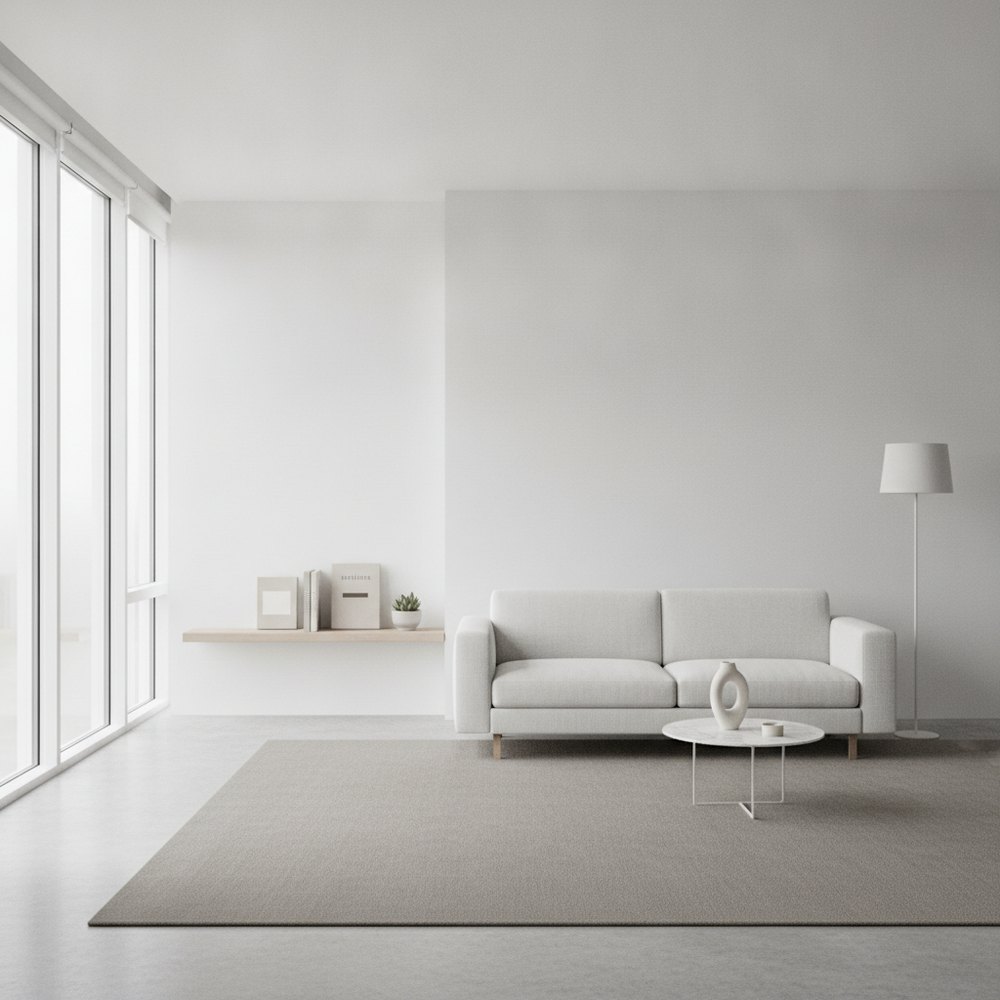
The things that genuinely brighten a dark room are: a large mirror positioned to reflect the window, warm rather than cool pale paint, clearing everything from the window and its reveals, pale reflective flooring, and three or four warm artificial light sources at different heights. Brilliant white paint is the most common attempt and one of the least effective.
Why white paint often makes it worse
The default response to a dark room is to paint it brilliant white, and it frequently produces a room that is both gloomy and cold.
White works by reflecting light, and if there is very little light to reflect, it has nothing to work with. What it does instead is reveal its own undertone, and most brilliant whites are cool, so in weak north light they read grey. The room ends up looking like an under-lit office rather than a bright home.
The paint that actually helps in a dark room is a warm off-white or a soft warm neutral, something with a little yellow, red or brown in it. It reflects almost as much light and reads as warmth rather than as absence.
What genuinely works
In rough order of effectiveness.
- 1A large mirror positioned to reflect the window, not just placed on any wall. A mirror opposite or at an angle to the window effectively doubles the aperture.
- 2Clear the window completely. Curtains that stack back beyond the reveal, blinds that pull fully above the glass, no furniture in front, nothing on the sill, clean glass, and cut back whatever is growing outside.
- 3Warm pale paint on walls and ceiling, and paint the window reveals the same colour so light bounces in rather than hitting a shadowed frame.
- 4Pale, slightly reflective flooring. A light timber or a pale rug bounces significantly more light than a dark carpet.
- 5Three or four warm artificial sources at different heights, on dimmers, so the room works in the evening and on grey days.
The window is the whole problem
Everything else is compensation, so it is worth being systematic about the aperture itself.
Look at what is blocking it. Net curtains cut light substantially. A blind that sits within the reveal covers glass even when fully raised. A curtain pole that is not wide enough means the curtains cover the edges of the window all day. A dark, deeply recessed reveal absorbs light before it enters.
The fixes are cheap: extend the curtain pole 30cm beyond the window each side so curtains stack fully clear of the glass; mount blinds above the reveal rather than inside it; paint the reveals a pale warm colour; and prune whatever is outside. Together these often recover more light than any decorating decision.
Mirrors, used properly
Mirrors are the most recommended and most carelessly applied trick in this category.
A mirror only brightens a room if it reflects a light source. A large mirror on the wall opposite the window reflects the window and effectively adds a second aperture. A mirror on the same wall as the window reflects the dark wall opposite, and does nothing except make the room look busier.
Bigger is better, and one large mirror beats several small ones. A leaning floor mirror is the easiest large option and needs no fixing. Mirrored or reflective surfaces elsewhere, a glass table top, a glossy cabinet, a metallic lamp base, all contribute in a small way.
Artificial lighting for a dark room
A dark room needs a proper artificial scheme, because it will be relying on it for much of the day.
The instinct is to put in a brighter ceiling light, which flattens the room and creates a bright pool with dark edges. What works better is several moderate sources at different heights: a floor lamp in the darkest corner, a table lamp, a wall light, and something that washes a wall or ceiling.
Uplighting is particularly effective in a dark room, because bouncing light off a pale ceiling turns the whole ceiling into a soft light source, which is closer to how daylight behaves.
Keep everything warm, 2700K, and use dimmers so the room can be bright on a grey afternoon and low in the evening.
When to stop fighting and go dark
The genuinely useful contrarian advice, and it applies more often than people expect.
Some rooms will never be bright. A north-facing box room, an internal room with no window, a basement, a room overshadowed by a building. In those cases every brightening measure produces a room that is still dim and now also bland.
The alternative is to lean into it: a deep saturated colour on walls, ceiling and woodwork, warm layered lamp light, rich textures, and the room becomes a deliberate den rather than a failed bright room. North-facing rooms in particular take deep green, oxblood and warm charcoal beautifully, because the cool light keeps the colours from feeling heavy.
The test is honest: after clearing the window and adding a mirror, is the room genuinely bright or merely less dark? If it is the latter, stop and change direction. Our wall colour psychology guide covers what different colours do.
Things that do not help much
Worth naming so you do not spend money on them.
Brilliant white paint, for the reasons above. Small mirrors dotted around, which add clutter and reflect nothing useful. High-gloss paint on walls, which shows every flaw and reflects light in hard patches rather than diffusing it. Removing all colour, which produces a dim beige room rather than a bright one. And extremely bright cool-white bulbs, which make a room feel like a waiting area without making it feel brighter in any pleasant sense.
Test both directions
The decision between brightening and going dark is genuinely hard to make in the abstract, and easy to make when you can see both.
With Decorly you can photograph the room and compare a warm pale scheme against a deep enveloping one at your actual light level, which is the fastest way to settle it. For the dark option, see dark academia interior design; for lighting, see best lighting for every room.
Frequently asked questions
What is the best paint colour for a dark room?
A warm off-white or soft warm neutral, not brilliant white. White reflects light but needs light to work with, and most brilliant whites have cool undertones that read grey in weak north light. Warm pale colours reflect nearly as much and read as warmth rather than absence.
Do mirrors actually make a room brighter?
Only when positioned to reflect a light source. A large mirror opposite or at an angle to the window effectively doubles the aperture. A mirror on the same wall as the window reflects the dark wall opposite and adds nothing. One large mirror beats several small ones.
How should you light a room with little natural light?
With three or four moderate warm sources at different heights rather than one bright ceiling light. Uplighting is particularly effective, since bouncing light off a pale ceiling turns the ceiling into a soft source, which is closer to how daylight behaves. Use 2700K and dimmers.
Should I paint a dark room a dark colour instead?
Often yes. If a room will never be genuinely bright, a north-facing box room, an internal room, a basement, brightening measures produce a room that is still dim and now bland. A deep saturated colour with warm layered lamp light turns it into a deliberate den instead.