Guides
How to Choose the Right Paint Finish for Every Surface
July 26, 2026 · 8 min read
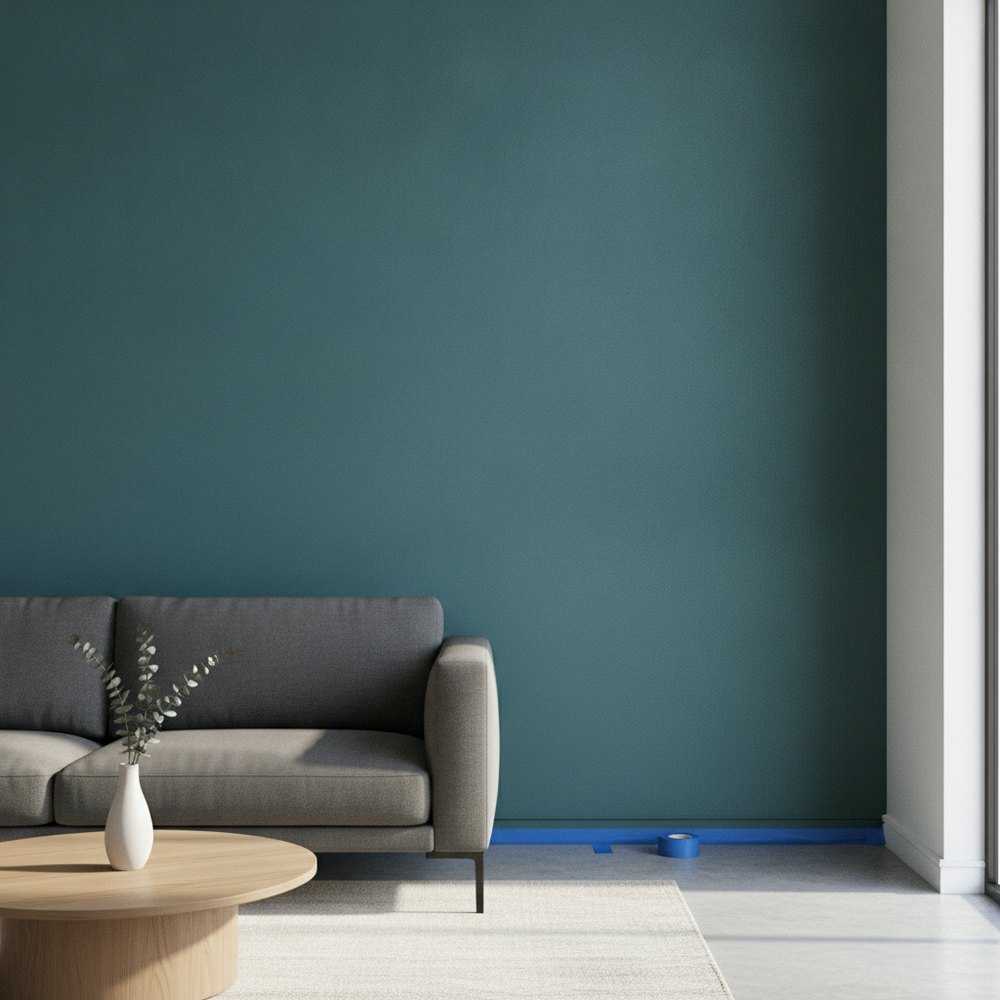
As a default: matt or washable matt on walls, eggshell or satinwood on woodwork, flat matt on ceilings, and a moisture-resistant finish in bathrooms and kitchens. Sheen level is a trade-off, the more sheen, the more washable and durable the surface, and the more it reveals every imperfection underneath.
What sheen actually does
Paint finish is often treated as a minor decision made at the till, and it changes both how a colour looks and how a room performs.
Sheen is the amount of light a dried paint film reflects. Flat matt reflects almost none, so light scatters and the colour reads deep and even. Gloss reflects most of it, so you see the shape of the surface as much as the colour.
The trade-off runs in one direction: sheen comes from a harder, less porous film, which is why glossier paints wipe clean and resist knocks better, and why they also show every filled patch, roller mark and bump in the plaster. Every finish choice is a position on that line.
The finishes, from flat to gloss
Names vary by manufacturer, so match the description rather than the label.
- Flat matt. Almost no sheen, deepest colour, hides imperfections best, marks easily and is hard to clean. Ceilings, and walls in low-traffic adult rooms.
- Washable or durable matt. The current default for walls. Nearly the depth of matt with a wipeable surface. Worth the small premium almost everywhere.
- Eggshell. Low sheen, considerably more durable. The standard for interior woodwork, and useful on walls in hallways and kitchens.
- Satin or satinwood. Mid sheen, hard-wearing, common on woodwork. Shows brush marks and surface flaws more than eggshell.
- Gloss. High sheen, very durable, very unforgiving. Traditional on woodwork in period homes and now less fashionable; excellent on a front door or radiator.
Walls: matt or eggshell?
The most common question and the answer has changed in the last decade.
Traditionally the choice was flat matt for looks or eggshell for durability. Durable matt paints have largely resolved that: they give close to a flat matt appearance with enough of a film to be wiped, which makes them the sensible default for almost every wall in a house.
Where eggshell on walls still makes sense: hallways and stairwells, where bags and shoulders hit the wall constantly; downstairs cloakrooms; and children's rooms where washing happens weekly. Accept that it will show the plaster more.
One thing worth knowing: the flatter the finish, the better it hides a bad wall. If your walls are old, uneven or heavily patched, flat matt is doing you a genuine favour and gloss will expose everything.
Woodwork
Skirting, architrave, doors, window boards and built-in joinery.
Eggshell is the modern default and looks considerably more contemporary than gloss. It has enough hardness for daily contact, does not yellow as readily as old oil-based gloss, and its low sheen sits comfortably beside a matt wall.
Satinwood is a step up in durability and sheen and is a reasonable choice on doors and skirting in a busy family home.
Gloss is period-correct in Victorian and Edwardian houses and is very hard-wearing. It is also completely unforgiving of surface preparation; every dent and every brush mark shows.
Water-based versions of all three are now good, dry fast and do not yellow. Oil-based still gives a slightly better flow and takes far longer to cure.
Kitchens and bathrooms
Moisture and grease change the calculation, and the specialist paints are worth using.
In a bathroom, use a paint specifically formulated for the room. These contain a fungicide and are formulated to resist condensation, and they now come in matt as well as sheen finishes, so you no longer have to accept a shiny bathroom. Extraction matters far more than paint choice for mould, but the right paint helps.
In a kitchen, the wall above a worktop takes grease as well as moisture, so a wipeable finish, durable matt at minimum, eggshell where it gets hit, is sensible. Behind the hob, use a splashback rather than relying on paint.
For ceilings in both, a moisture-resistant matt is the correct choice, since bathroom ceilings are where condensation collects first.
Ceilings
The simplest decision and the one people most often get wrong by using leftover wall paint.
Ceilings should be flat matt, because ceilings are almost always the least perfectly finished surface in a room and they are lit from below by lamps, which rakes light across them and reveals everything. Any sheen at all will highlight every joint and every roller lap.
White is not compulsory. Painting a ceiling the same colour as the walls, in a matt finish, is the colour-drenching technique and makes a room feel enveloping. A ceiling in a slightly lighter tint of the wall colour is a subtler version of the same idea.
Practical points before you buy
A few things that affect the result more than the brand.
Sheen level changes the apparent colour. The same paint in matt and in eggshell will not look like the same colour on the wall, because one absorbs light and the other reflects it. Sample in the finish you will actually use.
Two coats, always, and over a decent primer on bare or patched surfaces. A single coat of an expensive paint will look worse than two coats of a cheap one.
Paint samples on white card rather than directly on the wall, so you can move them around the room and are not looking at them against the old colour.
And check the coverage per litre rather than the price per tin, since premium paints often cover better and take fewer coats. Our guide to paint colours for 2026 covers the colour side.
See the finish in your room
Sheen is exactly the thing a paint chart cannot show you, because a chart is printed flat and a wall is lit from an angle.
With Decorly you can photograph your room and compare a colour rendered in different finishes and light levels before buying five litres. For colour selection, see best paint colours 2026 and AI colour palettes for rooms.
Frequently asked questions
Should walls be matt or eggshell?
Durable or washable matt is the sensible default for most walls, since it gives close to a flat matt appearance with a wipeable surface. Eggshell still makes sense in hallways, stairwells, cloakrooms and children's rooms, at the cost of showing the plaster more.
What paint finish should woodwork be?
Eggshell is the modern default: hard enough for daily contact, low sheen that sits well beside matt walls, and more contemporary than gloss. Satinwood is a more durable option for busy homes, and gloss is period-correct but completely unforgiving of surface preparation.
What finish should a ceiling be?
Flat matt. Ceilings are usually the least perfectly finished surface in a room and are lit from below by lamps, which rakes light across them. Any sheen will highlight every joint and roller lap. Ceilings do not have to be white; matching the wall colour in matt is a good option.
Does paint finish change how a colour looks?
Yes, noticeably. Matt absorbs light so colour reads deeper and more even; sheen reflects it so the same colour appears lighter and more variable across the wall. Always sample in the finish you intend to use, not just the colour.