Styles
Contemporary vs Modern Design: The Difference, Finally Settled
July 25, 2026 · 8 min read
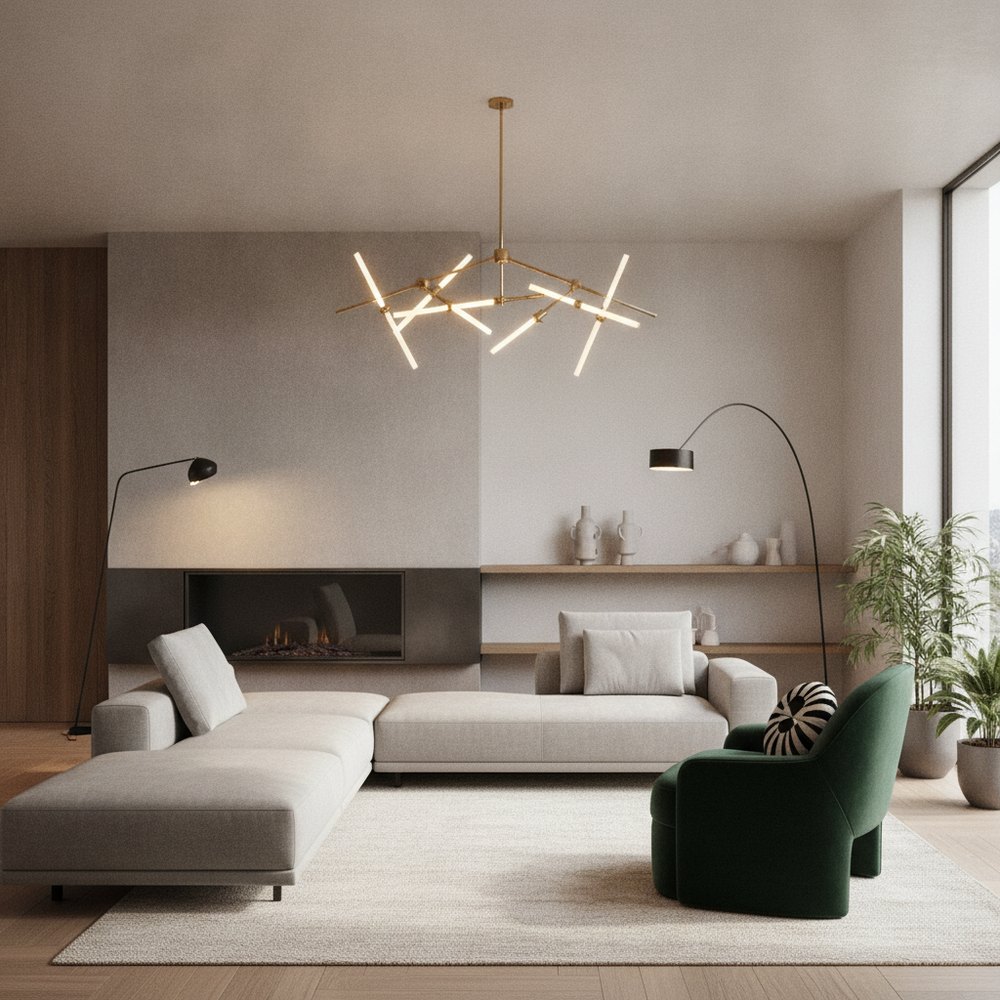
"Modern" and "contemporary" are not interchangeable, even though almost everyone swaps them freely. Modern design is a specific movement, born in the early to mid-20th century, with a fixed look. Contemporary design simply means the style of right now, so it is always shifting. One is a period; the other is a moving target.
Why the two words get confused constantly
This is the design question we get asked more than any other, and no wonder. In ordinary speech "modern" just means new, up to date, current, so calling a brand-new room "modern" feels obviously right. Estate agents do it, furniture shops do it, everyone does it.
The trouble is that in design, "modern" was long ago claimed by a particular movement with a particular look, and it stopped meaning "new" a century ago. So when a showroom labels a glossy 2026 sofa "modern", it may mean genuinely of-the-moment, or it may mean styled after 1950s modernism, and those are not the same thing at all. Sorting the two out makes shopping, and briefing anyone, far less confusing.
What "modern" actually refers to
Modern design is a historical movement, not a synonym for new. It grew out of early-20th-century modernism, the Bauhaus in Germany, Scandinavian design, and the mid-century era roughly from the 1930s to the 1960s that most people picture when they hear the word.
Because it is anchored to a period, it has a settled, recognisable look that does not change: it is what it is. "Mid-century modern", the tapered-leg, teak-and-tweed style everyone loves, is the best-known chapter of it. The key thing to hold onto is that modern is a closed set. A modern room made today is a faithful continuation of an established style, not an invention.
- Clean, straight lines and simple, honest geometric forms with little ornament.
- Warm natural woods teak, walnut and oak, often with those signature tapered legs.
- "Form follows function" every piece earns its place; decoration for its own sake is out.
- A warmer, earthier palette than people expect, often with a single bold accent, mustard, teal, burnt orange.
- Open, uncluttered space and a strong connection to the outdoors through large windows.
What "contemporary" actually means
Contemporary design means, quite literally, the design of the present moment. It is defined by time, not by a fixed set of rules, which is exactly why it is slippery.
Because it tracks whatever is current, contemporary is fluid and forever evolving. Contemporary in the 1990s meant something different from contemporary now, and contemporary in 2036 will have moved again. It borrows freely from whatever is in the air, so today's version leans on soft, curved forms, warm neutrals, natural materials and the influence of minimalist, Scandinavian and Japandi thinking. Pin it down and it will have changed by the time you finish decorating. That is not a flaw; it is the whole definition.
- Whatever is current it reflects the prevailing trends of now, not a single historical era.
- Softer, more organic shapes at the moment, curves and rounded edges over hard geometry.
- A calm neutral palette warm whites, greiges and earthy tones, with texture doing the work.
- A magpie approach it happily mixes influences rather than following one rulebook.
- Constantly moving what counts as contemporary shifts every few years, by definition.
Contemporary vs modern, side by side
The clearest way to hold the difference is to line the two up on the points where they genuinely diverge. Get these and the confusion falls away.
- Time modern is a fixed historical period (roughly 1930s–60s); contemporary is always the present and keeps moving.
- Change modern is settled and unchanging; contemporary evolves constantly.
- Lines modern favours crisp straight lines and geometry; contemporary currently leans towards softer curves.
- Mood modern feels warm and retro-familiar; contemporary feels fresh, calm and of-the-moment.
- Rules modern follows an established playbook; contemporary borrows from whatever is current.
- Naming "modern" always points to the same thing; "contemporary" points to a target that shifts under your feet.
Where they overlap
Part of the reason the words blur is that, right now, the two genuinely do share a lot of ground, which is not always the case. Both favour clean lines over fuss, both prize uncluttered space, and both draw on natural materials and a restrained palette.
Today's contemporary look has, in fact, borrowed heavily from mid-century modern, so a current room can legitimately carry a lot of modern DNA. This is exactly why the labels feel interchangeable at the moment. But it is a coincidence of timing, not a rule. If tomorrow's trends swing towards ornament and colour, contemporary will follow and the overlap with clean-lined modern will vanish, while modern itself stays put. The shared ground is real, but temporary.
Which word should you actually use?
For most conversations, ordering furniture, briefing a designer, describing your taste, getting the word right saves real confusion. Here is the simple test.
- Use "modern" when you specifically want the mid-century look: teak, tapered legs, clean geometry, that warm retro feel. Say "mid-century modern" to be unmistakable.
- Use "contemporary" when you mean current and trend-led, of-the-moment rather than tied to any one era.
- When briefing a designer name specifics, not just a label; "warm minimalist with curved contemporary furniture" beats one contested word.
- When shopping ask what a shop means by "modern", they may mean mid-century, or they may just mean new.
- Not sure which you like? our guide to choosing an interior design style helps you work it out.
How can you see modern and contemporary in your own room?
Definitions only get you so far; the real test is which look suits your actual space, your light, your proportions, the way the room is used. And it is a costly thing to get wrong once the furniture arrives.
With Decorly you upload a photo of your room and see it restyled in a true modern (mid-century) scheme and a current contemporary one, side by side, in seconds, keeping your real layout and windows. Comparing them on your own four walls settles the question far better than any definition can. For the wider picture, browse our styles library and our roundup of the best interior design styles for 2026.
Frequently asked questions
What is the difference between modern and contemporary design?
Modern design is a fixed historical movement from roughly the 1930s to the 1960s, with a settled look of clean lines, warm woods and function-first forms. Contemporary design simply means the style of the present moment, so it is always changing. Modern is a period; contemporary is a moving target.
Is mid-century modern the same as modern?
Mid-century modern is the best-known chapter of modern design, the tapered-leg, teak-and-tweed style of roughly the 1940s to 1960s. "Modern" in design covers the broader 20th-century movement, but in everyday use the two are often meant interchangeably. Say "mid-century modern" when you want to be unmistakable.
Why do people confuse contemporary and modern?
Because in ordinary speech "modern" means new, so calling a current room modern feels natural, yet in design "modern" was claimed by a specific 20th-century movement long ago. It doesn't help that today's contemporary look borrows heavily from mid-century modern, so the two genuinely overlap right now.
Which is better, modern or contemporary?
Neither, they are different tools. Choose modern (specifically mid-century) if you want a warm, timeless, retro-influenced look that won't shift. Choose contemporary if you want your home to feel current and of-the-moment, accepting that "current" keeps moving. It depends on whether you want a fixed style or an evolving one.
Will contemporary design look dated in ten years?
By definition, today's contemporary will not be tomorrow's, because the word means whatever is current. That is not really a problem: a well-chosen contemporary room ages into simply "a room from the 2020s". If you want a look that stays put, modern is the more stable choice.