Guides
Can AI Design My House? What It Can and Cannot Do
September 1, 2026 · 8 min read
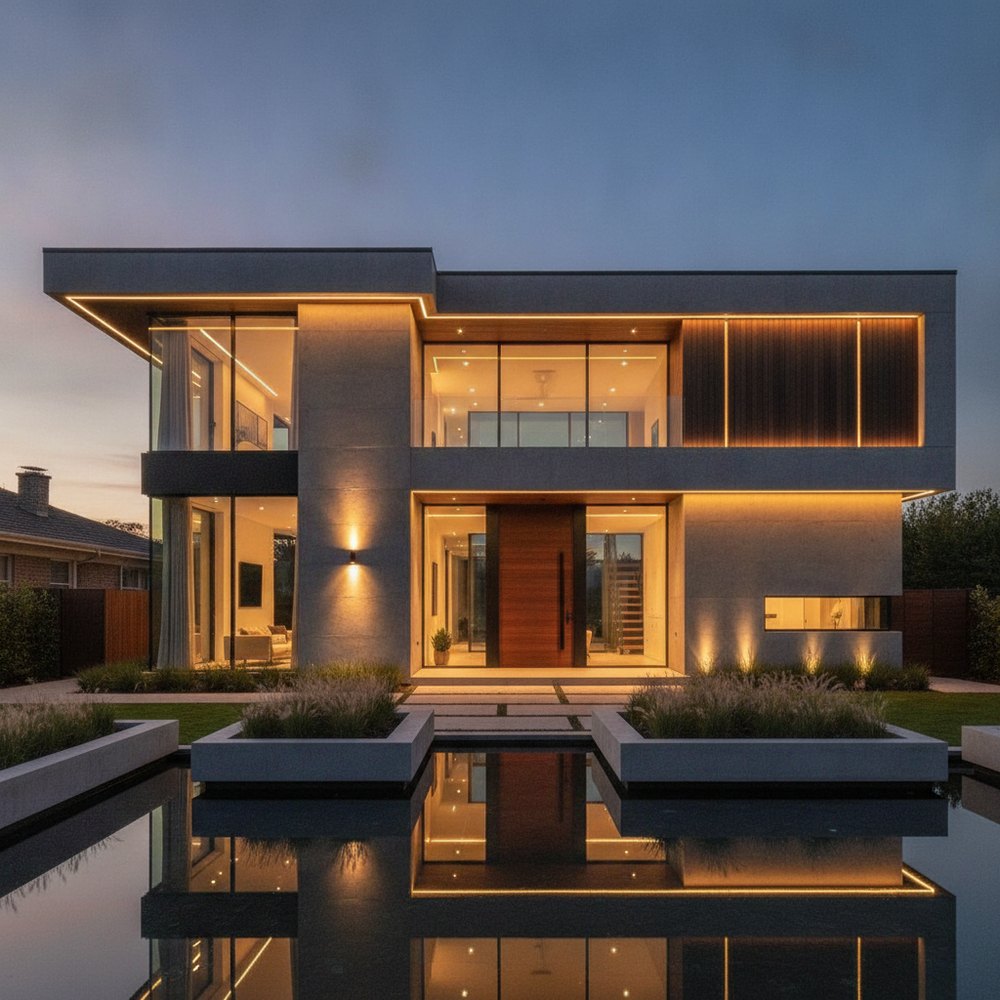
AI can design how your house looks, every room, in minutes, from photographs: palettes, materials, furniture, lighting and styling, with your real walls and windows preserved. It cannot produce building plans, assess structure, size services or sign anything off. Think of it as the visual half of the job done fast, not the whole job.
The short version
There are two distinct activities that both get called "designing a house", and conflating them is where most of the confusion comes from.
The first is deciding how it should look and feel: the palette, the materials, the furniture, the light, the mood of each room and whether they hang together. AI is genuinely excellent at this now, and considerably faster than any other method available to a normal person.
The second is deciding how it should be built: what is load-bearing, where the drainage runs, whether that opening needs a steel, how the electrics are zoned, what building control will accept. AI does none of this, and anyone claiming otherwise is selling something.
What AI genuinely handles well
The list is longer than sceptics expect.
- Whole-house coherence. Run every room through the same style brief and you get a house that hangs together, which is the thing most self-directed renovations fail at.
- Palette and material decisions, tested at full scale in your real light rather than from samples.
- Furniture scale and layout, shown in your actual proportions.
- Lighting schemes, rendered rather than described, which is the only way most people can judge them.
- Before-and-after persuasion, which matters if you are trying to agree a scheme with a partner or convince yourself a project is worth it.
What it cannot do, and why that matters
The limits are not arbitrary; they follow from the fact that the model is looking at a photograph, not a building.
It cannot see inside your walls, so it does not know what is structural. It has no measurements, so it cannot verify clearances, and a corridor that looks fine in a render can be 700mm wide in reality. It knows nothing about your drainage, your gas run, your ventilation or your electrical zones. It does not know your local building regulations or whether your property is listed or in a conservation area.
None of that makes it less useful. It makes it a different tool. You would not ask a mood board to calculate a steel beam either.
How do you use AI across a whole house?
The method that works is to establish the language once and then apply it, rather than designing each room in isolation.
Start with the room that sets the tone, usually the living room or the kitchen, and iterate until you have a scheme you are confident about. Write down its five defining decisions: wall colour, flooring, one metal, one timber, one accent colour. Then take those five decisions as fixed constraints into every other room's prompt. The bedroom gets the same timber and metal but a softer palette; the bathroom gets the same metal in a different material context. The result is a house that feels designed by one person rather than assembled from six Pinterest boards.
This is the single biggest thing that separates a renovated house that feels considered from one that feels like a series of rooms.
Where AI and a professional work together
The most effective way most people use this is as the front end of a professional process, not as a replacement for one.
Turning up to an architect or builder with a clear, visual, specific brief changes the conversation entirely. Instead of several paid hours spent working out what you want, you arrive with it. You spend their time on what they are actually for: whether it can be done, how, and for how much. It also reduces the risk of the expensive misunderstanding where you sign off drawings you cannot really read and dislike the result.
Our comparison of interior designer cost versus AI goes into the economics of that in more detail.
Will AI replace interior designers?
Not in the way the question usually implies, but it is genuinely changing what the job is.
What AI removes is the part of the service that was essentially visualisation and option-generation: producing schemes, mood boards and renders for a client to react to. That was billable work and it is now nearly free.
What it does not touch is judgement, sourcing, project management, trade relationships, problem-solving on site and the ability to tell a client that the thing they want will not work. Designers whose value was in producing pretty options are under pressure. Designers whose value is in getting a project delivered are not.
A realistic whole-house workflow
If you are renovating and want to use this properly, the sequence below is the one that wastes least.
- 1Photograph every room on the same overcast day, from the corner, lights off.
- 2Design the anchor room first and iterate until you are certain.
- 3Extract five fixed decisions from it and write them down.
- 4Run every other room with those five as constraints.
- 5Assemble the outputs into one document and check it reads as one house.
- 6Take that document to your builder, architect or kitchen designer as the brief.
Start with one room
The way to find out where the line sits for your project is to do one room properly.
With Decorly you upload a photo of any room and get a photoreal restyle in seconds, with your structure intact, then repeat the process across the house with the same brief. Start with the room you are least sure about. Our guides to home renovation planning and how AI interior design works cover the process either side of that.
Frequently asked questions
Can AI design my whole house?
It can design how every room looks, from photographs, in minutes: palettes, materials, furniture, lighting and styling with your real walls and windows preserved. It cannot produce building plans, assess structure or size services, so it handles the visual half of the job, not the technical half.
Can AI replace an architect?
No. An architect deals with structure, regulations, services and buildability, none of which AI can see from a photograph. What AI does is let you arrive at an architect with a clear visual brief, which makes their time cheaper and the outcome closer to what you wanted.
How do I keep a whole house feeling consistent with AI?
Design one anchor room first, then extract five fixed decisions from it, wall colour, flooring, one metal, one timber, one accent, and carry those into every other room's prompt as constraints. That is what makes a house feel designed by one person rather than assembled room by room.
Will AI replace interior designers?
It is replacing the visualisation and option-generation part of the service, which used to be billable and is now nearly free. It does not touch judgement, sourcing, project management or on-site problem solving, which is where most of a good designer's value actually sits.