Styles
Art Deco Interior Design: How to Get the Look
July 12, 2026 · 9 min read
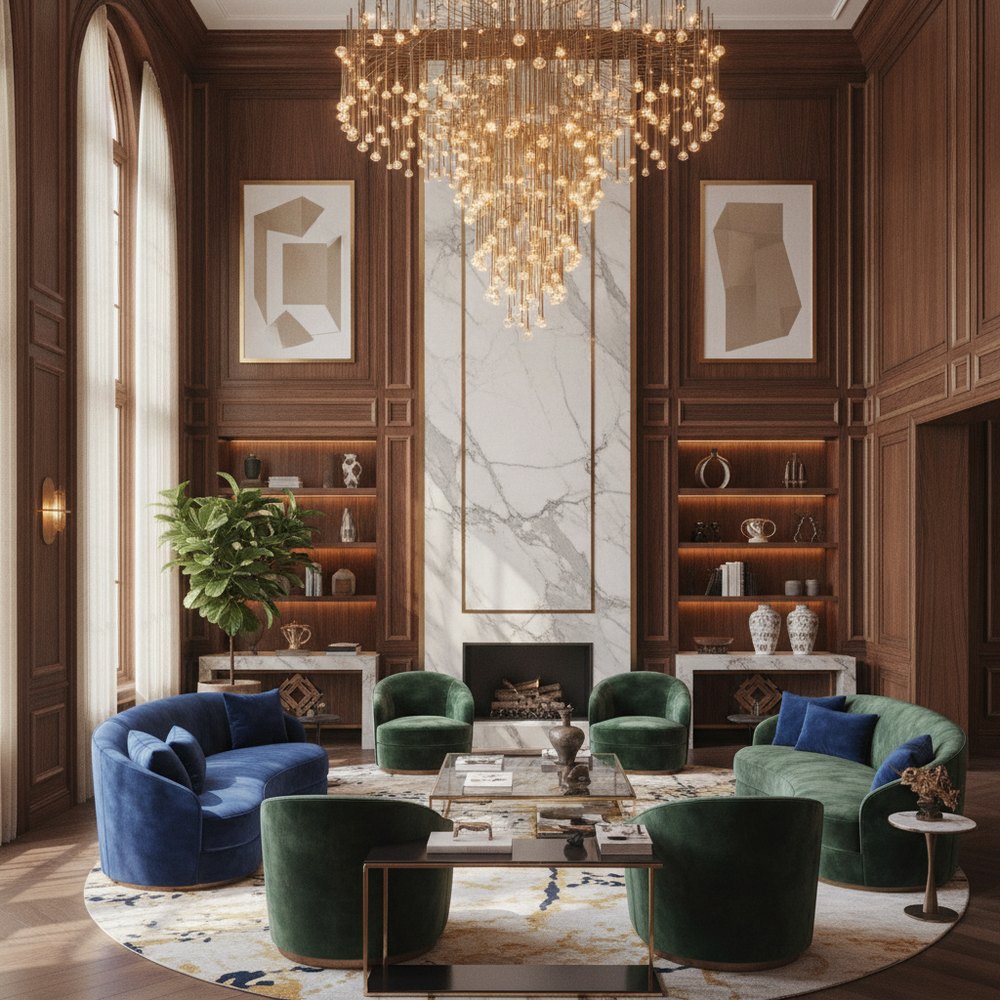
Art Deco interior design is the glamorous, geometric style born in the 1920s and 30s: bold symmetry, rich jewel tones, brass and gold accents, luxurious materials and confident statement pieces. It celebrates craftsmanship and opulence, and a modern, edited version brings that drama into today's homes without feeling like a film set.
What is Art Deco interior design?
Art Deco is a decorative style defined by glamour, geometry and symmetry. It combines bold shapes, sunbursts, chevrons, stepped forms and repeating lines, with luxurious materials and rich colour to create rooms that feel confident, elegant and unmistakably designed.
At its heart, Art Deco is about celebrating craftsmanship and modern luxury. Where many styles pursue calm or restraint, Deco embraces drama: statement lighting, mirrored and lacquered surfaces, and jewel-toned velvet all speak of glamour and optimism. The modern challenge is to capture that spirit in a curated way rather than a theatrical one.
Where does Art Deco come from?
Art Deco emerged in the 1920s and 30s, taking its name from the 1925 Exposition Internationale des Arts Decoratifs in Paris. It was the style of the interwar years, an optimistic, modern celebration of glamour, machine-age geometry and luxury that spread across architecture, interiors, fashion and film.
It drew on many influences, the clean geometry of modernism, the opulence of ancient Egyptian and Aztec motifs, and the streamlined shapes of new machines and skyscrapers. That mix of bold pattern and rich materials gave it a distinctive confidence that still reads as timeless glamour a century later.
What colours define an Art Deco palette?
Art Deco colour is rich and dramatic, built on deep, saturated tones and bold contrast, then lifted with metallics. The palette is designed to feel luxurious and high-contrast rather than soft.
- Jewel tones emerald, sapphire, ruby and amethyst for depth and opulence on walls and upholstery.
- Black and white high-contrast bases, often in bold geometric pattern, for graphic drama.
- Gold and brass warm metallics used generously as the signature Deco shimmer.
- Deep neutrals charcoal, chocolate and rich cream to ground the brighter jewel tones.
- Bold accents mustard, coral or teal used sparingly for a confident pop.
Which materials and textures make the look?
Art Deco is luxurious and tactile, built on polished, reflective and sumptuous materials. The mix of high-shine surfaces and rich fabrics is what gives Deco rooms their glamorous, light-catching quality.
- Brass, gold and chrome on lighting, hardware, frames and furniture legs for metallic gleam.
- Velvet and silk deep, jewel-toned upholstery and cushions for softness and richness.
- Mirror and glass mirrored furniture, glossy tabletops and statement glass for reflection and sparkle.
- Lacquered and exotic woods high-gloss finishes and richly grained veneers for polished luxury.
- Marble and stone dramatic-veined marble on floors, tables and bathroom surfaces.
Why do geometry and symmetry matter in Art Deco?
Bold geometry is the visual signature of Art Deco and the fastest way to signal the style. Sunbursts, chevrons, zigzags, stepped forms and repeating fan or scallop motifs appear on everything from rugs and wallpaper to cabinetry and mirrors.
Symmetry is just as important. Deco rooms are often arranged with deliberate balance, matched pairs of lamps, chairs or sconces flanking a central feature, which gives them their sense of order and grandeur. Together, strong geometry and confident symmetry are what make an Art Deco room feel composed and glamorous rather than merely busy.
What furniture and statement pieces define the style?
Art Deco furniture is bold, sculptural and luxurious, designed to make a statement rather than disappear. Pieces tend to have strong, sometimes curved silhouettes, glossy or veneered finishes and metallic detailing.
Think a curved velvet sofa, a mirrored or lacquered sideboard, a glass-and-brass coffee table and cocktail-cabinet drama. Lighting is a hero: a sunburst mirror, a sculptural chandelier or fan-shaped sconces anchor the glamour. For arranging these strong pieces with the symmetry the style loves, our furniture placement guide helps.
How do you do modern Art Deco without it feeling like a film set?
The risk with Art Deco is tipping from glamorous into theatrical or costume. Modern Deco works by taking the spirit, geometry, richness, a few statement pieces, and applying it with restraint against a calmer backdrop.
- Choose a few hero pieces one bold sofa, one statement light and one geometric feature go further than filling the room.
- Anchor with calmer walls a deep neutral or single jewel wall lets Deco accents shine without overwhelming.
- Use metallics as accents brass on hardware, legs and lighting, not on every surface.
- Keep geometry considered repeat one or two motifs rather than layering every Deco pattern at once.
- Blend with the modern pair Deco pieces with clean contemporary basics so it reads as fresh, not a period reproduction.
How can you preview an Art Deco redesign before you commit?
Art Deco involves bold, expensive commitments, jewel-tone walls, velvet furniture, brass and geometric pattern, so testing the drama in your own room before you buy is genuinely valuable. This is exactly where AI design earns its keep.
With Decorly you upload a photo of your room and generate an Art Deco version of that exact space in seconds, keeping your real windows, walls and proportions. You can trial an emerald scheme against a moody navy, or judge how much brass and pattern feels right, before spending anything. Explore more looks across our styles library.
Frequently asked questions
What is Art Deco interior design?
Art Deco is a glamorous decorative style from the 1920s and 30s defined by bold geometry, symmetry, rich jewel tones, brass and gold accents and luxurious materials like velvet, mirror and marble. It celebrates craftsmanship, opulence and confident statement pieces.
What colours are used in Art Deco interiors?
Deep jewel tones such as emerald, sapphire, ruby and amethyst, high-contrast black and white, and generous gold or brass metallics. Deep neutrals like charcoal and rich cream ground the scheme, with bold accents used sparingly.
How do you make Art Deco feel modern rather than dated?
Take the spirit rather than copying a period room: choose a few hero pieces, anchor with calmer walls, use metallics as accents rather than everywhere, and pair Deco items with clean contemporary basics so the look reads fresh and curated.
What patterns are typical of Art Deco?
Bold geometric motifs: sunbursts, chevrons, zigzags, stepped forms and repeating fan or scallop shapes. These appear on rugs, wallpaper, cabinetry, mirrors and tiling, usually arranged with strong symmetry.
Can I visualise Art Deco style in my own room?
Yes. Decorly redesigns a photo of your real space in the Art Deco style in seconds, preserving your layout, so you can test jewel tones, metallics and geometric patterns before you buy anything.