Guides
AI Interior Design Prompts That Actually Produce Usable Rooms
September 2, 2026 · 10 min read
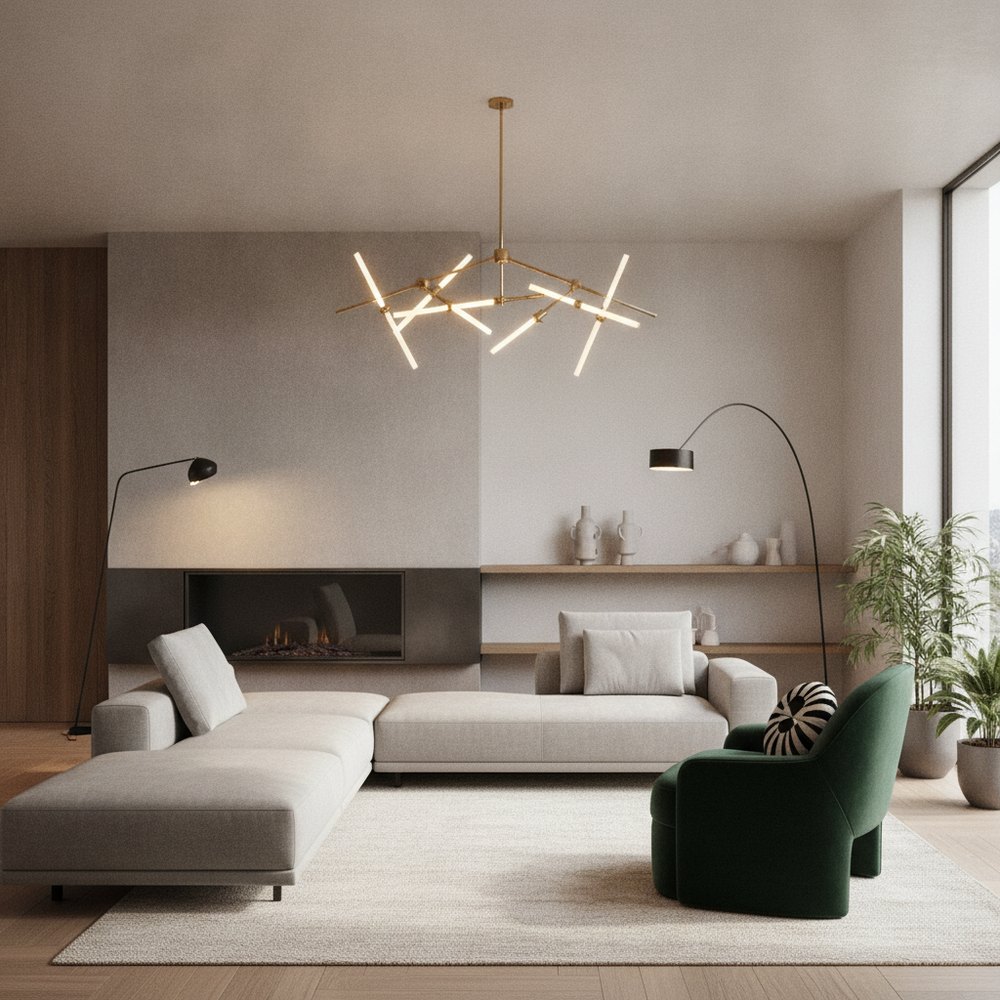
A good AI interior design prompt names four things: the style or mood, one material anchor, the lighting quality, and one thing to keep. "Warm minimalist, oak floors, soft evening lamp light, keep the existing sofa" will beat "make it nice" every time, because each element gives the model something specific to build around.
Why most prompts fail
The usual first attempt is a style name and nothing else. "Scandinavian." "Modern." "Luxury." And the result comes back technically correct and completely generic, because a style name is an enormous region of possibilities and the model has to pick the average of it.
The average of a style is, by definition, the most predictable version. It is the version you have seen in a hundred catalogue photographs. It is not wrong, it is just not yours.
The fix is not longer prompts. It is more specific ones. Four well-chosen details will out-perform a paragraph of adjectives, because adjectives stack into mush while specifics constrain.
The four-part prompt structure
Use this shape and almost any prompt improves immediately.
- 1Mood or style, in two or three words. "Warm minimalist", "faded grandeur", "quiet luxury", "cosy Japandi".
- 2One material anchor. Name a single material and let everything else follow: oak, travertine, blackened steel, oatmeal linen, rattan.
- 3Lighting quality. "Soft evening lamp light", "bright morning daylight", "warm pooled lighting, no ceiling light". This changes the render more than most people expect.
- 4One constraint. Something to keep or avoid: "keep the existing sofa", "no open shelving", "renter-friendly, nothing structural".
40 prompts that work
Take any of these, swap in your own room, and adjust one variable at a time.
- Warm minimalist living room, oak floors, soft evening lamp light, keep the existing sofa
- Quiet luxury bedroom, oatmeal linen, plaster walls, low warm bedside lighting
- Cosy Japandi living room, low furniture, paper-shade lighting, one green plant
- Modern organic bedroom, limewashed walls, bouclé headboard, morning daylight
- Dark cocooning study, deep green walls, brass picture light, no overhead lighting
- Scandinavian kitchen, pale ash cabinets, white worktop, bright north light
- Industrial loft living room, exposed brick, black steel shelving, warm filament lighting
- Coastal bedroom, whitewashed timber, sheer linen curtains, soft afternoon light
- Mid-century living room, walnut sideboard, mustard accent chair, tapered legs
- Maximalist dining room, patterned wallpaper, gallery wall, candlelight
- Small bedroom, single saturated colour on walls and ceiling, low bed, warm lamps
- Rental living room, no wall changes, layered rugs, floor lamps, plants
- Home office, built-in oak desk wall, task lighting, acoustic panelling
- Nursery, soft neutral palette, natural wood cot, blackout curtains, gentle lamp light
- Bathroom, large-format stone-look tile, wall-hung vanity, black fittings, mirror lighting
- Kitchen, deep green base units, pale stone worktop, brass handles, under-cabinet light
- Entryway, panelled walls, bench with storage, wall hooks, warm downlight
- Studio apartment, one open space zoned by a rug and a low shelf, daylight from one window
- Dining room, round table, pendant low over the table, moody wall colour
- Teen bedroom, dark walls, LED shelf lighting, desk under the window, no clutter
- Guest bedroom, hotel-like symmetry, matching bedsides, layered white bedding
- Living room with a television, television on a dark wall with shelving either side
- Open plan living kitchen, two seating zones, consistent flooring, pendant over island
- Loft conversion bedroom, sloped ceiling, built-in eaves storage, skylight daylight
- Terrace, porcelain paving, raised timber planters, string lighting, evening
- Small garden, diagonal paving layout, dense boundary planting, hidden seating corner
- Balcony, folding bistro set, vertical planting, warm string lights
- Home gym, rubber flooring, full-height mirror, bright even lighting
- Walk-in wardrobe, open oak hanging, integrated lighting, island drawer unit
- Laundry room, wall-to-wall cabinetry, folding counter, hidden appliances
- Reading nook by the window, armchair, floor lamp, low bookshelf
- Hallway, runner rug, picture rail gallery, warm wall sconces
- Staircase, painted balustrade, runner carpet, wall lighting up the flight
- Basement living space, warm artificial lighting, layered textiles, no daylight
- Attic playroom, low storage, soft flooring, playful colour, skylight
- Sunroom, rattan seating, terracotta floor, abundant plants, strong daylight
- Pooja room, carved timber, warm gold lighting, marble base, calm palette
- TV wall, fluted panelling, integrated media unit, indirect backlighting
- False ceiling design, layered cove lighting, recessed spots, clean modern lines
- Master bedroom with dressing area, partition screen, warm layered lighting
How to iterate rather than restart
The mistake after a mediocre first result is to throw the whole prompt away and write a new one. That resets your learning.
Change one variable instead. If the palette is right and the furniture is too heavy, keep every word and add "lighter, more open furniture". If the mood is right and it is too cold, add "warmer light, more timber". Within three or four rounds you converge on something specific to your room, and, more usefully, you learn what you actually want, which is the real output of the exercise.
Words that reliably change the result
A short vocabulary that does a lot of work.
- "Layered" adds textiles and depth to a flat room.
- "Restrained" removes clutter and calms a busy result.
- "Warm" and "cool" shift both palette and light temperature.
- "Low" applied to furniture makes ceilings read as higher.
- "Matt" and "honed" kill the plastic sheen that makes some renders look artificial.
- "Lived-in" stops results looking like showrooms.
Try these on your own room
Pick the prompt closest to your room, run it, then change exactly one word.
With Decorly you can describe the room you want in your own words and see your actual space restyled in seconds, keeping your walls, windows and layout fixed. Start with the four-part structure above. If you are not sure which style you are aiming at, read how to choose an interior design style first.
Frequently asked questions
What makes a good AI interior design prompt?
Four elements: a mood or style in two or three words, one material anchor such as oak or travertine, a lighting quality such as soft evening lamp light, and one constraint such as keeping the existing sofa. Specifics constrain the model; adjectives alone do not.
Why do my AI room designs look generic?
Almost always because the prompt was only a style name. A style name is a huge region of possibilities, so the model returns the average of it, which is the version you have seen in a hundred catalogues. Add a material, a light quality and a constraint and the output becomes specific.
Should I write long prompts?
No. Four well-chosen details beat a paragraph of adjectives, because adjectives stack into mush while specifics constrain the result. Then iterate by changing one variable at a time rather than rewriting from scratch.
How many times should I regenerate a design?
Three or four rounds is usually where it converges. The first result tells you what the model assumed, the second corrects the biggest error, and by the third or fourth you have learned what you actually want, which is the real value of the exercise.