Rooms
TV Wall Design Ideas That Make the Television Look Intentional
August 27, 2026 · 9 min read
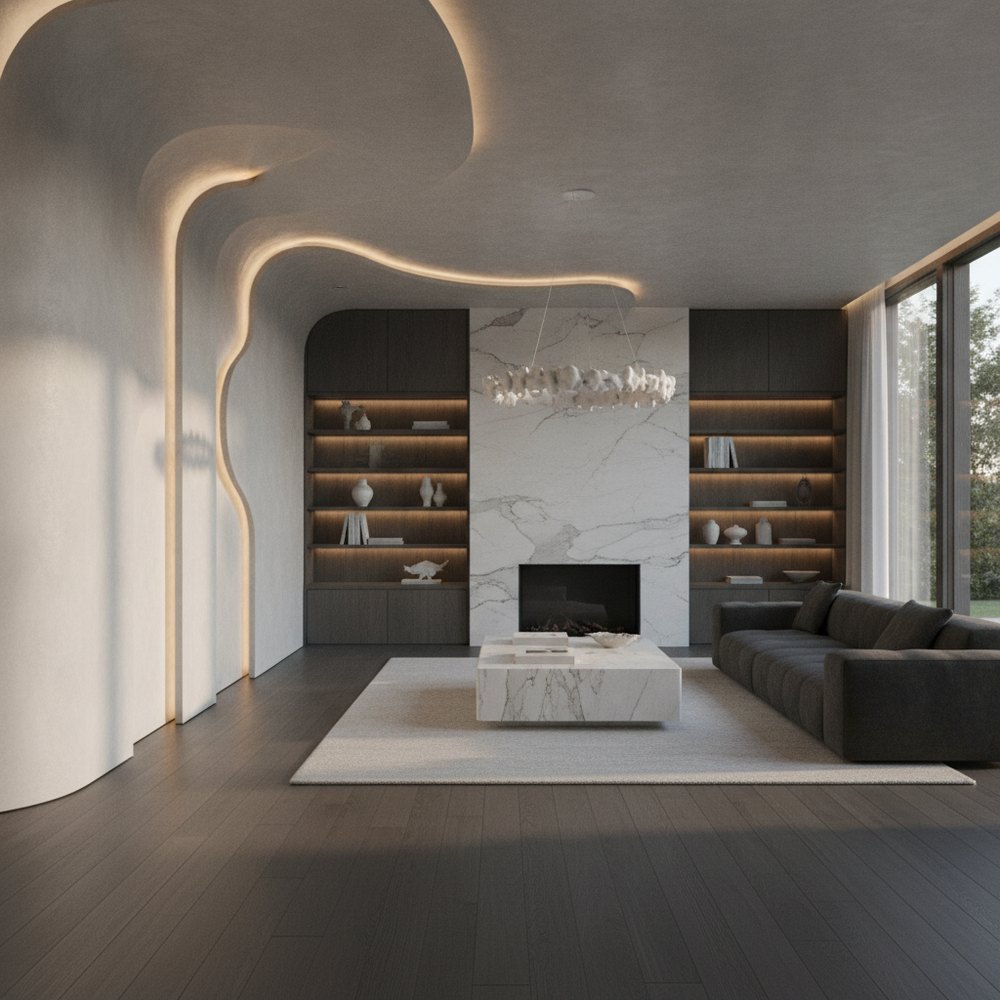
The three treatments that reliably make a television look intentional are: absorb it into a dark wall so it disappears when off, set it into panelling or joinery so it reads as part of the architecture, or frame it with symmetrical shelving so it becomes the deliberate centre of a composition. A black rectangle on a pale bare wall never looks right.
Why a bare TV wall always looks wrong
It is not snobbery about televisions. It is a contrast problem.
A switched-off television is the darkest, flattest, most rectangular object in the room. Put it on a pale wall with nothing around it and it has maximum contrast against its background and no visual company, so the eye goes straight to it and stays there. The room ends up organised around a black void.
Every successful TV wall solves one of those two variables: reduce the contrast, so the screen stops shouting, or give it context, so it belongs to something. The nine ideas below are all versions of one of those.
Nine treatments that work
Ordered roughly from cheapest to most involved.
- 1Dark paint on the TV wall only. The cheapest fix by a distance. A deep charcoal, green or navy on that one wall drops the contrast and the screen recedes. A weekend and a tin of paint.
- 2Symmetrical shelving either side. Gives the screen company and turns it into the centre of a composition rather than an intruder. Works best when the shelves are styled sparsely.
- 3Full-wall panelling, painted. Vertical battens or a shaker grid across the whole wall, painted one colour including behind the television. The screen becomes one panel among many.
- 4Fluted or slatted timber. The current favourite for good reason: the vertical rhythm is strong enough to hold its own against the screen, and the timber warms a room that is otherwise hard-surfaced.
- 5Floating media unit with backlighting. A wall-hung cabinet with an LED strip behind it, so it appears to float. Hides the boxes and cables and adds a low light layer.
- 6Recessed niche. Set the screen into a shallow recess so its face sits flush with the wall. Expensive, and the most invisible result of all.
- 7Full-height joinery wall. Floor-to-ceiling cabinetry with the television set into it. The most storage, the most cost, and the treatment most likely to look built-in rather than bought.
- 8Stone or tile feature wall. A slab or large-format tile behind the screen. Reads as luxury, but it is unforgiving of a badly placed bracket, so plan cabling first.
- 9Art-frame or gallery approach. Surround the screen with a dense gallery wall so it reads as one frame among many. Cheap, effective, and requires commitment to the density.
Should the TV go above the fireplace?
The honest answer is that it is usually a compromise, and it is worth knowing which compromise you are making.
The case for it is that many rooms have exactly one wall that works, and the fireplace is on it. The case against is ergonomic: a screen above a mantel is typically 1.4 to 1.6 metres to its centre, which is well above comfortable seated eye level of around 1 to 1.2 metres, and you will feel that on a long evening. There is also the heat question, which matters with a real fire and much less with a modern sealed unit or an electric one.
If it has to go there, mitigate: choose the lowest mantel arrangement you can, tilt the bracket down, and treat the whole chimney breast as one dark or panelled surface so the screen and the fireplace read as a single composition rather than two competing objects.
Getting the height right
The most common installation error, and it is free to avoid.
The centre of the screen should sit at roughly seated eye level, which for most people on a normal sofa is 1 to 1.2 metres from the floor. That is considerably lower than most people mount it. Sit on your sofa, look straight ahead, and have someone mark the wall where your eyeline hits. That mark is the centre of your screen.
Viewing distance matters less than people think with modern panels, but as a rough guide, sit about 1.5 to 2.5 times the screen's diagonal away. If your room forces you closer than that, the screen is too big for the room, and no amount of panelling fixes it.
Cables, boxes and the things nobody plans for
The design fails at the details more often than at the concept.
- Run cables in the wall if you are doing anything structural. A recessed back-box behind the screen plus a conduit down to the media unit is the difference between built-in and bodged.
- Plan a socket behind the screen, not just below it.
- Ventilate closed cabinets. Set-top boxes and consoles in a sealed cupboard overheat.
- Check the soundbar height before finalising shelf positions; it usually needs 80 to 100mm clear beneath the screen.
- Leave IR line of sight or plan a repeater if the boxes are going behind solid doors.
Lighting a TV wall
Backlighting is not decoration here; it does a specific job.
A warm LED strip behind the screen or behind a floating unit raises the brightness of the surrounding wall, which reduces the contrast between a bright screen and a dark room. That is easier on the eyes over a long evening and is why so many people who install it say the room feels calmer without being able to say why.
Keep it warm and dim, and avoid colour-changing strips left on blue, which is the single fastest way to make an otherwise elegant wall look like a games room.
Test it on your wall first
Panelling and joinery are expensive and permanent, and the difference between fluted timber and painted battens on your particular wall is very hard to imagine.
With Decorly you can photograph your living room wall and see each of these treatments rendered at your real proportions and lighting before you commit to a carpenter. For the wider room, see living room design ideas and how to decorate around a TV.
Frequently asked questions
How do I make my TV look better on the wall?
Reduce the contrast or give it context. The cheapest effective fix is painting that one wall a deep colour so the screen recedes. Beyond that, panelling, fluted timber, symmetrical shelving or full-height joinery all make the television read as part of the architecture rather than an object stuck to it.
What height should a TV be mounted at?
The centre of the screen should sit at seated eye level, roughly 1 to 1.2 metres from the floor for most sofas. Sit down, look straight ahead, and mark where your eyeline meets the wall. Most televisions are mounted noticeably higher than this and it is felt over a long evening.
Is it bad to put a TV above a fireplace?
It is a compromise rather than a disaster. The screen ends up well above comfortable seated eye level, which causes neck strain over time, and heat matters with a real fire. If the room forces it, tilt the bracket down and treat the whole chimney breast as one panelled or dark surface so it reads as a single composition.
Should I put lighting behind my TV?
A warm, dim LED strip behind the screen or a floating unit genuinely helps, because it lifts the surrounding wall brightness and reduces eye strain from a bright screen in a dark room. Keep it warm white rather than colour-changing, which otherwise reads as a games room.