Outdoor
Terrace Design Ideas for Rooftops, Balconies and Back Terraces
August 18, 2026 · 9 min read
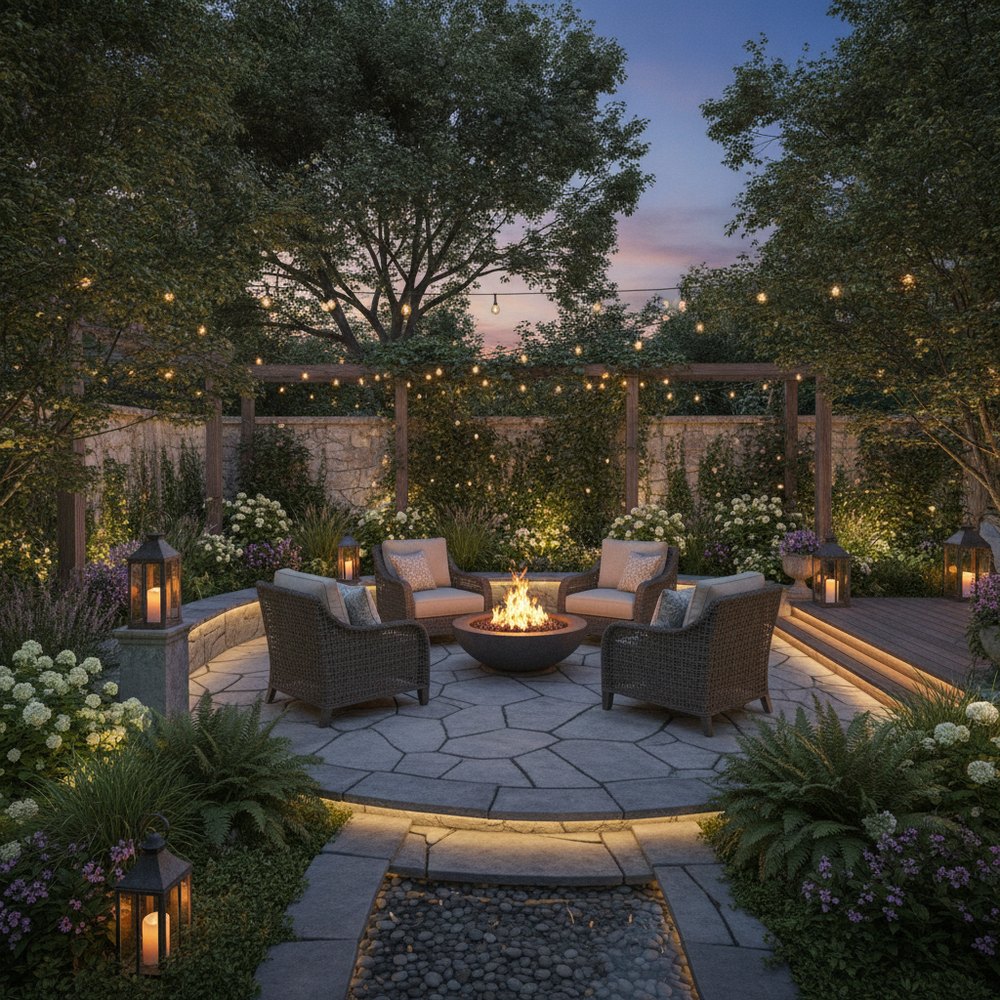
A terrace needs four things a garden does not: flooring that copes with a hard substrate, planting that lives entirely in containers, shade you can control, and shelter from wind, which is the single most common reason terraces go unused. Get those right and the styling is straightforward.
Why terraces get abandoned
Most unused terraces are not unused because they are ugly. They are unused because they are uncomfortable, and almost always for one of three reasons.
Wind is the first and biggest, particularly on a roof or an upper floor. A terrace that is pleasant on a still day becomes unusable at 15mph, and since nobody plans for wind, the furniture sits there for a decade being blown about.
Sun is the second: a south or west-facing terrace with no shade is unusable for the exact hours you would want to be on it. And exposure is the third, being overlooked, which people underestimate until they have tried to eat dinner in full view of four flats.
Solve those three and the terrace gets used. Skip them and no amount of nice furniture will help.
Flooring on a hard substrate
Terraces sit on structure rather than soil, which rules some materials in and others out.
- Pedestal-mounted porcelain. Slabs on adjustable feet over the existing surface. Level, dead flat, drains beneath, removable for access, and the go-to for roof terraces.
- Composite decking tiles. Interlocking tiles that clip together over an existing surface. The easiest DIY option and genuinely good in a rental or where you cannot alter the substrate.
- Timber decking. Warm underfoot and good acoustically, but needs a ventilated build-up and annual maintenance, and gets slippery.
- Outdoor rugs over hard surfaces. The cheapest transformation and surprisingly effective at making a terrace read as a room.
- Check the loading. On a roof terrace, weight is a structural question. Confirm what the structure takes before adding stone, large planters or a hot tub.
How do you shelter a terrace from wind?
The counterintuitive point first: a solid screen is usually worse than a permeable one.
A solid barrier creates turbulence and a downdraught on the leeward side, which is why a solid glass balustrade sometimes makes a terrace windier in specific spots. What works is filtering the wind rather than blocking it: slatted timber screens with gaps, a hedge of dense container planting, perforated metal, or a partially open pergola.
Position matters more than height. Identify the prevailing wind direction, usually one corner, and shelter that side rather than ringing the whole terrace. And put the seating in the sheltered pocket you have created, not in the middle.
Shade you can control
Fixed shade is a mistake on most terraces, because the thing you want in July you resent in April.
The best solutions are adjustable: a retractable awning, a pergola with a retractable fabric canopy, a large cantilever parasol that can be repositioned, or shade sails that can be taken down in winter. All of them let you have the terrace in both seasons.
A pergola is the strongest structural gesture and does two jobs at once: it provides shade and it gives the terrace a ceiling, which is what makes an outdoor space read as a room rather than a leftover surface. Plant a climber up it and by year three it does the shading itself.
Planting in containers only
Terrace planting is container planting, and the rules are different from garden planting in ways that catch people out.
Bigger pots are easier, not harder. A large container holds more water, dries out more slowly and buffers root temperature, so a few big planters will thrive where a dozen small ones die every August. Aim for a minimum of 40 to 50cm depth for anything shrubby.
Choose plants that tolerate wind and drought: olive, rosemary, lavender, pittosporum, grasses, phormium, box. Skip anything that needs consistent moisture unless you are installing irrigation, which for a terrace of any size is genuinely worth doing.
Group planters rather than lining them along the edge; grouped planting reads as a garden, a row reads as a border. Our balcony garden guide covers small-space container planting in more detail.
Lighting a terrace
A terrace is used more in the evening than a garden, so lighting is not an afterthought here.
The most effective scheme is low and warm: string lights overhead if there are two fixing points, uplights into two or three planters, and something at seating level such as a lantern or a table lamp designed for outdoors. Avoid bright wall-mounted floodlights, which flatten the space and annoy the neighbours.
Solar has improved but is still weak. If there is any possibility of running a spur out, do it at build stage. Battery-powered rechargeable outdoor lamps are the practical middle ground and have become genuinely good.
Furniture that survives
Terrace furniture takes more punishment than garden furniture because there is no shelter and often more wind.
Weight is the primary criterion. Lightweight aluminium furniture on a roof terrace is a hazard. Choose heavy pieces, or pieces that fold flat and can be stored, or pieces designed to be filled with water or sand.
Built-in seating around the perimeter is the best answer where space is tight: it is fixed, it stores things underneath, it reads as architecture, and it seats more people than chairs in the same footprint. Add loose cushions that come in when it rains.
Render it before you build
Terraces are especially hard to imagine because the surroundings dominate and the space is usually irregular.
With Decorly you can photograph the terrace and test flooring, screening, a pergola and planting density against your real outlook and light before committing. For related ideas, see balcony garden ideas and patio design ideas.
Frequently asked questions
What is the best flooring for a roof terrace?
Porcelain slabs on adjustable pedestals, because they sit level over an uneven substrate, drain beneath, and lift out for access. Interlocking composite decking tiles are the easiest DIY alternative and work well where the existing surface cannot be altered.
How do you make a windy terrace usable?
Filter the wind rather than blocking it. Solid screens create turbulence and downdraughts; slatted timber, dense container planting or perforated panels slow the wind without the eddying. Shelter the side the prevailing wind comes from and put the seating in the pocket you create.
What plants work on a terrace?
Wind and drought tolerant species in large containers: olive, rosemary, lavender, pittosporum, ornamental grasses, phormium and box. Use pots at least 40 to 50cm deep, because large containers hold water and buffer root temperature far better than several small ones.
Do I need to check the structure before designing a roof terrace?
Yes. Weight is a structural question on any roof or upper-floor terrace, so confirm the permitted loading before adding stone paving, large planters, built-in seating or anything water-filled. Everything else in the design follows from that limit.